Your in the right place if you want to know how to clean mold from dishwasher drain…
It might surprise people that your dishwasher is not actually getting cleaned every time you run a load of dirty dishes through a wash cycle.
It is definitely true that most homes find it very convenient to have a dishwasher in them as it helps make one of the less loved chores so much easier.
However, anytime you add water and heat, you have to understand that there is always a chance for mold growth.
Not only does a dishwasher have a humidity factor, but there’s also a chance for water leakage, and this can be a fertile breeding ground for bacteria and mold.
So how do you clean mold from dishwashers?
Can you prevent mold from growing in dishwashers and dishwasher drains?
We will answer all these questions and so much more in this very article. Let’s get right to it.
Table of Contents
How to tell if there’s mold in your dishwasher
Mold in your dishwasher can be a serious problem, as it can affect the cleanliness of your dishes and even cause health issues.
But how can you tell if there’s mold in your dishwasher?
Here are some signs to look out for:
- Unpleasant odours: If your dishwasher has a musty or sour smell, it could be a sign of mold growth.
- Discoloration: Look for any discoloration or staining on the interior of your dishwasher. Mold can appear as black, green, or brown spots.
- Slimy residue: If you notice a slimy residue on the interior of your dishwasher, it could be a sign of mold growth.
- Allergic reactions: If you or anyone in your household experiences allergic reactions such as sneezing, coughing, or a runny nose after using the dishwasher, it could be a sign of mold growth.
Is The Black stuff in the dishwasher mold?
The black stuff that can appear in your dishwasher is often a cause for concern, as it can be difficult to determine whether it’s mold or something else.
While it’s possible that the black stuff in your dishwasher is mold, it could also be caused by other factors such as food particles or hard water stains.
To determine whether the black stuff in your dishwasher is mold, look for signs such as a musty odour, slimy residue, or discoloration on the interior of your dishwasher.
If you notice any of these signs, it’s likely that the black stuff is mold and you should take action to eliminate it.
Where Does the Mold Come From?
No one wants to talk about the growth of mold in an appliance that is used to help clean kitchenware. But the truth is you have to understand where this growth comes from.
Like other microbes in its family, mold needs certain features and factors to grow.
When you look at the list – heat, moisture, darkness, food particles – you will quickly see why the dishwasher can be a thriving home for this fungus.
If you just take the leftover food scraps themselves, that would be enough to cause bacteria to grow.
But when you put them in a wet, humid, and dark environment, this makes it the perfect place for mold to find a home.
Of course, on the flip side, you may be thinking to yourself that running your dishwasher on the hottest setting coupled with the dishwasher detergent you use is enough to keep mold at bay.
But you would be wrong because not only are you dealing with everything we just talked about, but some of those dishwasher detergents also utilise salt as one of their main ingredients.
This can cause yeast and leave you with the potential problem of a mouldy dishwasher (not just any mold but black mold can actually result from this yeasting).
The truth is that there are a variety of types of mold, and each of those finds its sustenance in different places and on different things.
When looking for a common breeding ground for bacteria, you should look no further than the bits of food stuck on different parts of your dishwasher.
But these molds don’t only feed off of the difficult food residue; some actually feed off of parts of your dishwasher, particularly parts like your rubber seal, and some even attack things like your drain covers.
But can mold within your dishwasher actually make you ill?
Can Mold In A Dishwasher Make You Ill?
Mold left unchecked can cause some very severe health issues. So it is best to address the problem quickly and effectively so that you can protect your family from any potentially harmful side effects of having a moldy dishwasher.
Ways to Clean Mold From Your Dishwasher

If you’ve started noticing musty odours or the dishwasher not working appropriately, it’s best to start with a good effective scrub using hot soapy water.
Of course, before this, a few steps should be taken to ensure you are doing an effective cleaning of your dishwasher.
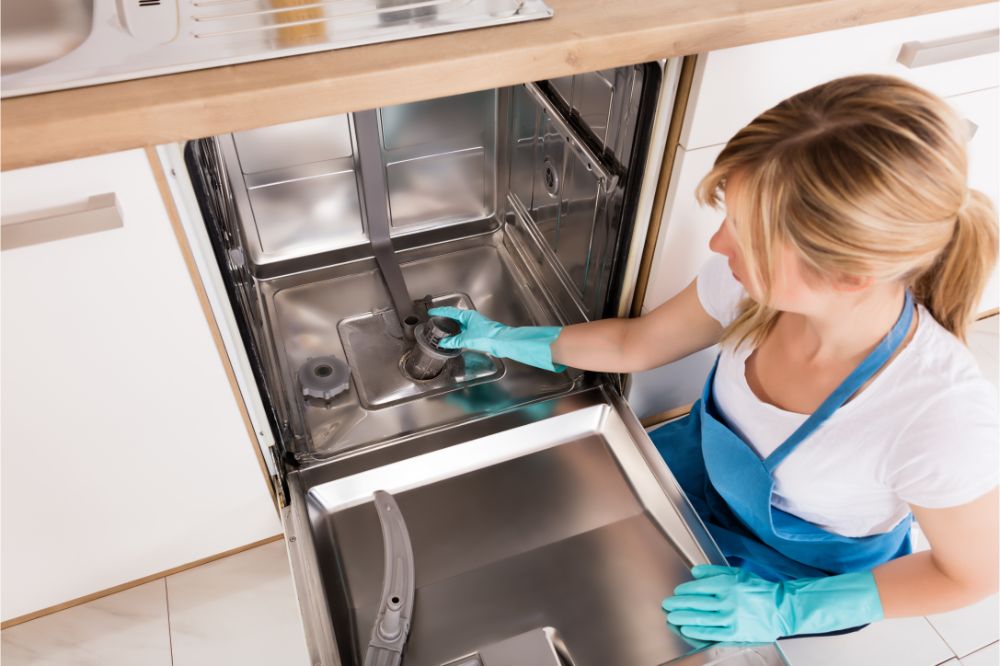
Deep cleaning the dishwasher should start by removing things like the racks, the rotor, and the drain strainer. They should all be washed separately in a sink filled with that same hot soapy water.
Before hand washing those pieces, let them sit for a few minutes.
During this time, you can take a bottle brush or some sort of scrub brush and utilize it to do a thorough once-over on all the rubber parts and crevices within your dishwasher.
You can also use that same scrub brush for larger areas like the dishwasher floor, and then you want to do a deep clean of the drain and seal system.
Finally, you can take a clean sponge and do a thorough once over to ensure you’ve removed any of the excess molds that may still be present.
Once that’s done, you can wash and dry the parts you removed and replace them in the washer.
Now that the deep clean of the washer is done, you can then disinfect the dishwasher for an added second level of security.
You might also want to do a once-over on the exterior of your dishwasher with some paper towels using a little water and vinegar for an extra deep clean.
The key is starting with a mold-free dishwasher which, if you followed the steps above, you now have. Now you want to disinfect the dishwasher, which can be done in a multitude of different ways.
One word of caution, though, with the bleach option, this is only to be used if you do not have a stainless steel interior when it comes to your dishwasher’s model.
Bleach will cause problems with stainless steel and discolour it, leaving permanent damage that could lead to more issues down the road.
Best ways to disinfect your dishwasher
White Vinegar
When you use the vinegar method, you’re going to want to fill a dishwasher-safe bowl with about a cup of vinegar and then place it on the top rack of a completely empty unit.
Then you’ll want to set it for the hottest settings you have and put your dishwasher through a washing and drying cycle.
Baking Soda
To use the baking soda method, you’ll want to take a box of it and sprinkle about half to one cup of the contents across the dishwasher floor.
Close the dishwasher and then run it on a short cycle with hot water. This will help eliminate the musty smell and disinfect the unit.
Bleach
Take one cup of bleach and pour it into the bottom of the dishwasher. Then run the dishwasher on a full wash cycle.
You may want to repeat this every couple of months to ensure that your dishwasher is running at optimal performance.
Lemon
If you want to use lemon juice to clean your dishwasher and leave a refreshing citrus scent, you can do so by filling a small dishwasher-safe container with lemon juice and placing it on the bottom rack of your dishwasher.
Then, run a regular cycle to allow the lemon juice to kill off any remaining bacteria or odours that may be hiding on your dishwasher parts.
Commercial Cleaner
If you’re not only trying to disinfect but also get rid of some of that soap scum or mineral deposits from the interior of your dishwasher, then you might want to go with a little bit of a more powerful option.
You can run your dishwasher with a commercial dishwasher cleaner. Once that is done, you can take a water/vinegar mixture and do an in-depth clean, as discussed above.

Preventing Mold in Your Dishwasher Drain
Once you have gotten rid of the mold, the final thing you want to do is repeat this process consistently. That means taking a few steps to prevent the mold from returning. Here are some of those simple steps.
Whenever your dishwasher is not in use, you might want to leave the door open just a crack. This will allow fresh air to circulate through it and get rid of any of those musty smells and decrease the chance of mold growth.
Of course, you can always make the cleaning process that we discussed at the very beginning a consistent upkeep routine.
This means repeating the same process every month or two, but it will definitely ensure that the mold does not return.
For those with garbage disposals, you should run them before you load your washer.
These two systems share pipes, and by running the garbage disposal, you will be making sure you clear the pipe of any food debris, which helps ensure mold doesn’t have a place to call home.
Try to run hot water through your kitchen sink until it is as hot as it possibly can get. This will help the water get up to temp before you actually run your dishes through it, which will make it run smoother.
When you run your dishwasher, make sure that it is a full dishwasher. This will not only save water and money on your energy bill, but it will allow the dishwasher to run the way it’s supposed to.
In order to keep your dishwasher clogs down to a minimum, as well as to ensure your dishwasher filter doesn’t have to do overtime work, make sure you rinse your dishes before you load them.
Sanitise the gasket
The rubber seal on the inside of your dishwasher door is a common place for mold and bacteria to collect, so it’s important to give it a thorough cleaning every few weeks.
To clean the seal, you can use a toothbrush and some soapy water to remove any grime or dirt. Adding white vinegar to the water can help increase the sanitizing power of the solution.
After cleaning the seal, make sure to dry it off thoroughly with a paper towel to prevent any moisture from collecting and allowing germs to grow again.
Clean out the Dishwasher filter
Regularly checking your dishwasher filter for food particles and debris is important to prevent mold growth in your dishwasher.
Rotting food can be a significant source of mold, especially if it’s circulated around the wash tub during cycles.
To avoid mold growth, clean out the filter about once a week and give the filter fixture a thorough scrub in soapy water at least once a month.
How Antimicrobial agents can help prevent mold in the dishwasher
Antimicrobial agents are substances that are designed to kill or inhibit the growth of microorganisms such as bacteria, viruses, and fungi.
These agents can be found in a variety of household cleaning products, including dishwasher detergents and cleaners.
Using dishwasher products that contain antimicrobial agents can be an effective way to prevent mold growth in your dishwasher.
Antimicrobial agents work by disrupting the cell membranes or metabolic processes of microorganisms, which can prevent them from growing and reproducing.
By using dishwasher products that contain antimicrobial agents, you can help eliminate any mold spores that may be present in your dishwasher and prevent them from colonizing and growing.
Best dishwasher cleaner for mold
To combat mold growth, it’s important to use a dishwasher cleaner that’s specifically designed to eliminate mold and prevent it from returning.
When looking for a dishwasher cleaner for mold, there are several factors to consider, including effectiveness, ease of use, and safety.
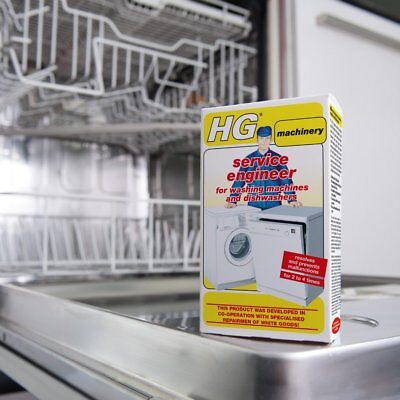
One top product available on Amazon is the HG Service Engineer for Dishwashers. This cleaner is specifically designed to remove mold, limescale, and other buildup from your dishwasher.
The HG Service Engineer for Dishwashers is easy to use and comes in a convenient single-use bottle.
Simply add the cleaner to your dishwasher and run a regular cycle to eliminate mold and other build up. The cleaner is safe to use and won’t damage your dishwasher or its components.
Frequently Asked Questions
How do you know if you have a mouldy dishwasher?
There are definite signs of mold you can watch for so that you can ensure you and the people you love are always safe from the ill effects of this harmful fungus.
Of course, one of the most telling signs is the mildew odour emitting from your appliance. If this happens, it’s time to do a deep clean and get rid of that mold.
Will running your dishwasher get rid of mold?
The truth is that simply running your dishwasher will not be effective in getting rid of mold. The only truly effective way is to do a deep clean and disinfect it well.
You can utilise the techniques we discussed in the above sections to do this.
How often should I clean my dishwasher drain to prevent mold growth?
Clean your dishwasher drain at least once a month to prevent mold growth. However, if you notice any signs of mold or a musty odour, you should clean the drain immediately.
Can I use bleach to clean mold from the dishwasher drain?
While bleach can be effective in killing mold, it’s not recommended to use it to clean the dishwasher drain. Bleach can damage the drain components and create harmful fumes.
Final Thoughts
Mold can be dangerous to you and your family. On top of this, it can also affect the performance of your dishwasher, so making sure that you are keeping a close eye on your dishwasher drain is important.
Of course, just because your dishwasher drain may grow mold does not mean that that is the end of the appliance.
All you have to do, as we said above, is do a deep clean and disinfect, and the dishwasher should be safe for you and your family to use.

Founder of homeappliancegeek.com, avid cook, and lover of Asian food.
Signature dishes include Thai Red Curry, Chicken Saag, Bibimbap and Sushi.
Massive clean freak; a habit baked-in after spending 9 years in the catering industry.
The one appliance he couldn’t live without? Easily the dishwasher (total relationship saver!).