Most of us rely on our dishwashers to keep our dishes clean and sanitary.
For this reason, having a blocked dishwasher can lead to a number of problems in the household. But How do you unblock a dishwasher?
To unblock a dishwasher, you can try cleaning the filter, spray arms, and drain with hot water and detergent. If there is still water in the dishwasher, you can scoop some out and check for any other blockages in the drain hose.
No matter what model of dishwasher you may have, you are likely to experience a blockage at some point.
In this article, we will be discussing everything that you need to know about this process in full detail, including what tools will be required. Make sure to skim through all the article otherwise you may miss some critical information!
Table of Contents
How Do I Know That My Dishwasher Is Blocked?
If you continue using your dishwasher when it is blocked, you could cause serious damage to the machine. For this reason, it is essential that you look for the warning signs.
When your dishwasher is blocked, it will make loud gurgling noises. More so, the machine may shake or thump during cycles.
Most dishwashers are connected to drainage systems in the kitchen sink. For this reason, if you notice that water is piling up in your sink while the dishwasher is on, it is very likely that your machine has a blockage.
Another common warning sign of a dishwasher blockage is slow draining. If you notice water pooling at the bottom of your dishwasher, it may be due to the fact that food or other debris is blocking the filter and draining pipes.
More so, if water is being backed up into the dishwasher once the cycle is complete, it is highly likely that there is a blockage.
Finally, if your dishwasher is not cleaning the dishes properly, your machine may have a blockage.
What Causes A Blocked Dishwasher?
It is important to note that most blocked dishwashers are caused by improper use.
For example, if you do not clean your dishes properly before loading them into the dishwasher, the leftover food and debris can get caught in the different components.
Oils are also a big problem, as they harden after the cycle is complete, becoming clogged in pipes, filters, and spray arms.
What Happens if you run a clogged dishwasher
When you run a clogged dishwasher, dirty water may back up into the dishwasher and the sink, causing unclean dishes and potentially damaging the dishwasher.
The dishwasher motor may also become damaged due to the extra strain of trying to push water through a clogged drain, leading to costly repairs or replacement.
how To Unblock A Dishwasher
Tools You Will Need
If you will be unblocking the dishwasher on your own, the first thing that you will need to do is ensure that you have all the necessary tools on hand. This includes:
- A screwdriver
- Toothpicks
- A clean dishcloth
- Water spray
- Dishwashing detergent
- An adjustable spanner
- A shallow pan to catch any debris
It is very important that you remember to switch off and completely unplug your dishwasher before getting to work.

Unblocking The Filter
The dishwasher’s filter is the first line of defence against any food and debris. The filter is specifically designed to catch these pieces before they reach the pump and cause any serious blockage issues.
So, if your dishwasher isn’t functioning or draining properly, the filter should be the first thing that you check. More so, it is very important that you clean out the filter regularly in order to avoid frequent blockages.
The filter of your dishwasher is very easy to check, clean out, and replace. This component can be found at the bottom of your dishwasher.
Most models can be removed by simply pulling or unscrewing the filter. If you are unsure as to where the filter is or what it looks like, be sure to check your dishwashers’ manual or the manufacturer’s website.
Start by giving your filter a thorough clean. Once it is removed, simply run the filter under hot tap water. If you have a high-pressure setting on your tap, be sure to use this.
You can then use an old toothbrush to scrub the screen and remove any grease particles or stubborn food debris. When you are happy that the filter is clean enough, reinsert it into the dishwasher.
However, as we have already mentioned, the filter is very easy to replace. For this reason, if your filter is very old and cannot be cleaned enough, you may want to consider replacing the component entirely.
Unblocking Spray Arms
The spray arms of a dishwasher spin around and spray hot water onto the dishes during a cycle. It is important to note that this component can also become clogged with grease, food, and other debris.
When this happens, the water jets become so clogged that water is not delivered to the dishes. This causes the dishes to come out dirty.
Luckily for you, unclogging the spray arms is a relatively simple task. For starters, ensure that the appliance is unplugged and switched off.
You can then remove the center bolt of the spray arms with a wrench.
Hold the arms under a stream of hot running water to remove any debris. For a more thorough clean, you can also use an old toothbrush and some dishwashing liquid.
Make use of the toothpicks to clean out the individual spray holes in each arm. You can then rinse the arms one more time.
Once you are satisfied with the spray arms, reattach them to the center bolt. It is important that you do not use any chemical cleaners on the spray arms.
Instead, if hot water does not remove all the grease, try a crease-cutting, dishwashing detergent.
Unblocking The Drain
The third possible reason for your blocked dishwasher would be a blocked drain. If the drain is blocked, you may notice dirty water that collects at the bottom of the dishwasher after every cycle.
In order to unclog the drain, start by cutting off the water supply to your machine. More so, ensure that the power supply to the dishwasher is cut off.
Be sure to check the drain hose at the back of the washer. If you notice that it is squashed or kinked, you will need to have this component replaced.
It is important to note that the drain hose is usually transparent or white and runs from the sink drain to the dishwasher drain pump.
Once the hose has been removed from the dishwasher, run some high-pressure water through it in order to remove any blockages.
The best way to do this would be to use a garden hose. Simply spray the garden hose into one end of the dishwasher hose.
Check sump for blockages
The sump is a critical component of a dishwasher’s cleaning system. It serves as a collection point for water and debris that are removed from the dishes during the wash cycle.
The sump is designed to prevent large particles of food or other debris from entering the dishwasher’s pump and drain system, which can cause blockages and damage.
Most dishwashers have a filter system that is located in the sump and is designed to capture and remove debris from the water.
Over time, the filter can become clogged with food particles and other debris, leading to poor dishwasher performance and clogs.
To prevent this, it is important to regularly clean the filter and the sump to ensure that water can flow freely through the dishwasher’s pump and drain system.
Waste Hose
The waste hose is another important component of a dishwasher’s drainage system. It is responsible for carrying dirty water from the dishwasher to the sink drain or garbage disposal.
Over time, the waste hose can become clogged with food particles, grease, and other debris, leading to poor drainage and potential damage to the dishwasher.
To check for blockages in the waste hose, you should first turn off the dishwasher and unplug it from the power source. Then, locate the waste hose and inspect it for any visible signs of damage or blockages.
You can use a soft brush or cloth to remove any debris that may be clogging the hose.
If the hose is damaged or cannot be cleared of blockages, it should be replaced to prevent further damage to the dishwasher’s pump and drain system.
Call In A Professional
It is important to note that you can simply call in a professional to unblock your dishwasher for you.
Many people do not have the time or tools available to clean out their machine on their own. If you are one of these people, calling in a maintenance expert may be the best way to go.
There are a number of advantages that come with hiring a maintenance expert. For starters, you will not have to worry about fixing the problem on your own.
More so, they are likely to perform a full service on the machine.
What If The Water Doesn’t Come Out the Other Side?
If this happens to you, then there is a massive clog that needs to be removed. You could do this by squeezing the dishwasher hose in order to move the blockage along.
This should help break down the blockage until it eventually passes through the other end. However, make sure that you do this carefully, as squeezing too hard could damage or split the hose.
If you have a freestanding dishwasher, carefully pull it away from the wall and make sure that there is enough room for the hose to drain correctly.
If you have an integrated dishwasher, you may need to call in a professional to get the job done right.
Once you are satisfied that the hose is unclogged, reattach it to the dishwasher. You can then turn your water back on and reconnect the power supply.
Is my drain hose connected to my waste disposal
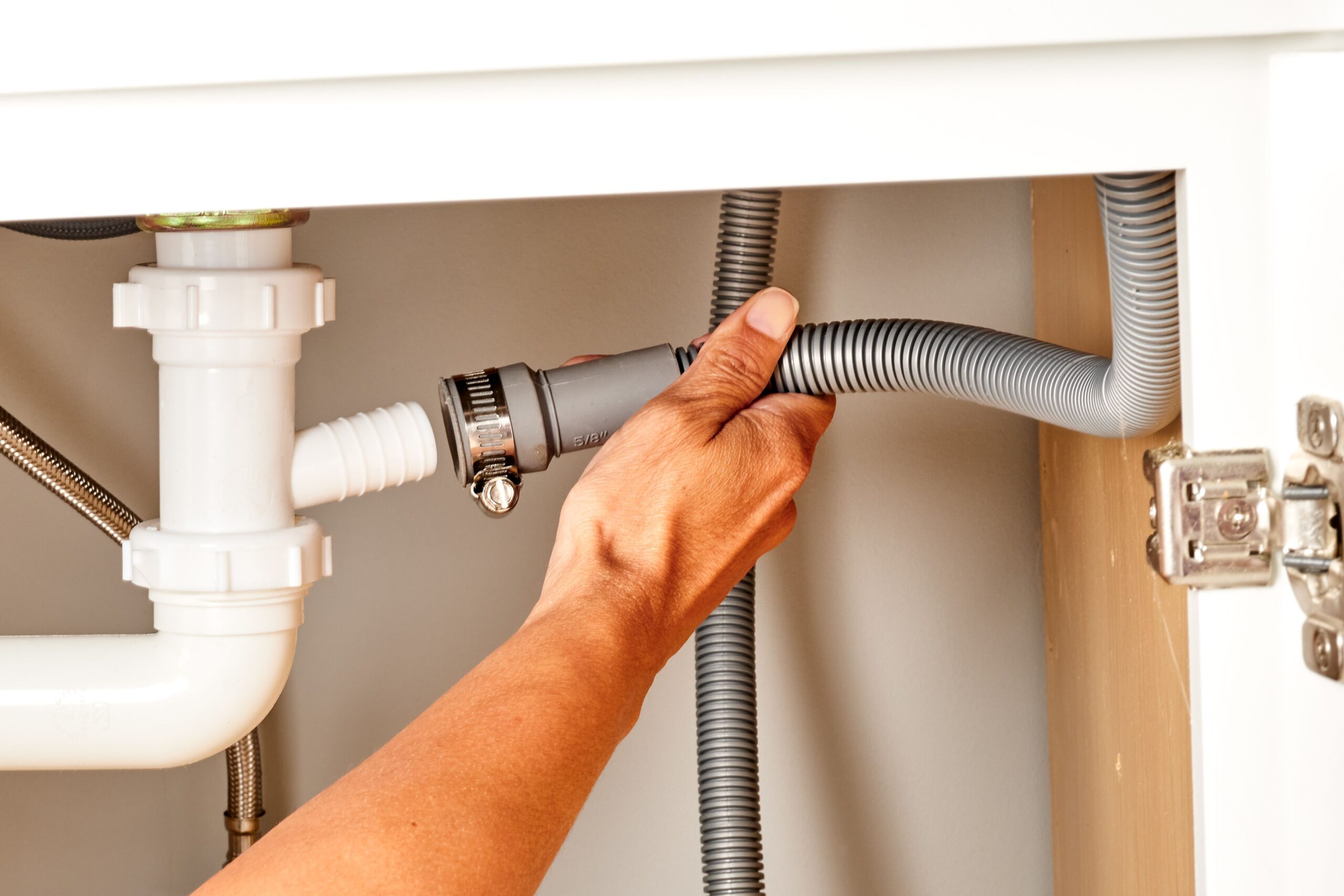
A dishwasher drain hose can be connected to a waste disposal unit or a sink drain.
If you’re unsure whether your dishwasher drain hose is connected to your waste disposal unit, you can check the area under your kitchen sink to see if there is a hose connected to the waste disposal unit or if there is a separate hose connected to the sink drain.
Check hose is bent or blocked
If the hose is bent or kinked, it can prevent water from flowing freely through the dishwasher’s drain system, leading to standing water and potential damage to the dishwasher.
To check for a bent or blocked hose, you should first turn off the dishwasher and unplug it from the power source. Then, locate the dishwasher hose and inspect it for any visible signs of damage, such as cracks or kinks.
If the hose is bent or blocked, you may be able to straighten it out or remove the blockage to restore proper drainage.
If the hose is damaged or cannot be cleared of blockages, it should be replaced to prevent further damage to the dishwasher’s pump and drain system.
Check sink waste pipe
A clogged or blocked sink waste pipe can cause water to back up into the dishwasher, preventing it from draining properly.
To check for a clogged sink waste pipe, you should first turn off the dishwasher and unplug it from the power source.
Then, remove the sink trap and check for any visible signs of blockages, such as food particles or grease build up.
You can also use a plunger or drain snake to remove any blockages that may be deeper in the waste pipe.
Once you have cleared the sink waste pipe, you can reassemble the sink trap and run a cycle on the dishwasher to ensure that the water is draining properly.
How To Avoid Blocked Dishwasher
There are a number of ways in which you can avoid a dishwasher blockage. As we have already mentioned, one of the main reasons for dishwasher blockages is not cleaning your dishes properly beforehand.
For this reason, the problem can be avoided by properly rinsing your dirty dishes before inserting them into the dishwasher.
On top of this, it is highly recommended that you service your dishwasher regularly. By keeping the machine well maintained, you can avoid blockages and a number of other technical difficulties.
More so, your machine will function for much longer if it receives the correct servicing.
Doing a monthly service wash on your dishwasher
To do a monthly service wash, you should first remove any food debris or large particles from the dishwasher’s interior and filter.
Then, place a dishwasher cleaning tablet or a cup of white vinegar in the bottom of the dishwasher and run a hot water cycle.
This will help to dissolve any mineral build up and remove grease and food particles from the dishwasher’s interior.
Once the cycle is complete, wipe down the interior of the dishwasher with a soft cloth or sponge to remove any remaining residue.
Can Dishwashers Self Clean
Yes, some dishwashers have a self-cleaning feature that can help to remove mineral build up and debris from the dishwasher’s interior.
This feature typically involves running a hot water cycle with a cleaning solution or tablet that is designed to dissolve and remove mineral build up and other debris.
Some dishwashers also have a steam cleaning feature that uses high-temperature steam to sanitize and clean the dishwasher’s interior.
Best Product to unblock a dishwasher

HG kitchen drain and plug unblocker is a specialised product designed to unblock kitchen drains and plugs. Can also be used on a blocked dishwasher.
It is a liquid drain cleaner that works quickly and effectively to remove stubborn blockages caused by food remnants, fat, and oil.
The product is safe to use on all types of drain pipes, including plastic pipes, and does not require dilution, which reduces the risk of splashing.
To use HG kitchen drain and plug unblocker, you should pour the product slowly and directly into the drain, taking care not to splash it onto your skin or clothing.
The product should be left to work for 30 minutes to an hour, depending on the severity of the blockage, before flushing the drain with hot water.
Frequently Asked Questions
What should I do if the dishwasher is still blocked after trying to unblock it?
If the dishwasher is still blocked after attempting to unblock it, you may need to call a professional plumber to address the issue. Attempting to force the blockage can cause damage to the dishwasher or plumbing system.
Is it safe to use chemical drain cleaners in my dishwasher?
Chemical drain cleaners can be effective in unblocking dishwashers, but it is important to use products specifically designed for use in dishwashers to avoid damage to the dishwasher’s interior or drain system.
Always follow the manufacturer’s instructions when using any product to unblock your dishwasher drain.
How often should I clean my dishwasher to prevent blockages?
It is recommended to clean your dishwasher’s filter, spray arms, and drain at least once a month to prevent blockages and maintain optimal performance.
Summary
One of the most common problems that you may encounter with your dishwasher is a blockage. It is important to note that you can simply call in a professional to service your machine.
However, if you want to get the job done yourself, you could also try unblocking the filter, spray arms, and drain.
In order to do this, you will need a number of tools, including toothpicks, an old toothbrush, and cleaning detergent.
Related articles:
- What is an Integrated Dishwasher
- How Much Salt To Put In The Dishwasher
- 10 Best Table Top Dishwashers Of 2023 (UK Reviews)
- Are Emma Bridgewater Mugs Dishwasher Safe (WARNING)
- Can You Put Non-Stick Pans In The Dishwasher? Experts Advice

Founder of homeappliancegeek.com, avid cook, and lover of Asian food.
Signature dishes include Thai Red Curry, Chicken Saag, Bibimbap and Sushi.
Massive clean freak; a habit baked-in after spending 9 years in the catering industry.
The one appliance he couldn’t live without? Easily the dishwasher (total relationship saver!).