So your here wondering how to descale a dishwasher right?
Good!
Descaling a dishwasher is an important maintenance task that should be performed regularly to keep your dishwasher functioning efficiently.
Over time, limescale and mineral deposits can build up inside your dishwasher, affecting its performance and even causing damage to the machine.
Descaling involves removing limescale and mineral deposits that accumulate inside your dishwasher over time.
These deposits can clog up the dishwasher’s spray arms, filters, and other components, affecting the machine’s ability to clean dishes effectively.
If left untreated, limescale can even cause damage to the dishwasher’s heating element, leading to costly repairs.
Now that you understand the importance of descaling your dishwasher, let’s take a look at the materials required and the steps involved in the descaling process.
Key Takeaways
- Descaling your dishwasher is an important maintenance task that should be performed regularly to keep your machine functioning efficiently.
- Limescale and mineral deposits can build up inside your dishwasher over time, affecting its performance and even causing damage to the machine.
- By following our step-by-step guide, you can ensure that your dishwasher is functioning at its best and that your dishes are coming out clean and sparkling every time.
What is Dishwasher Descaling?
Descaling is the process of removing limescale build up from the interior of your dishwasher. Limescale is a hard, chalky deposit that is left behind when hard water evaporates.
Over time, this build up can clog up the dishwasher’s spray arms, filters, and other components, reducing its cleaning performance and potentially causing damage.
Why is Descaling Important?
Descaling your dishwasher regularly is essential for maintaining its performance and prolonging its lifespan. Limescale build up can cause a range of problems, including:
- Reduced cleaning performance
- Unpleasant odours
- Damage to the dishwasher’s heating element, spray arms, and other components
- Increased energy consumption and higher electricity bills
By descaling your dishwasher regularly, you can keep it running smoothly and avoid these issues.
How to Descale Your Dishwasher
To descale your dishwasher, you will need a descaling solution, which is designed to dissolve limescale build up.
There are many different types of descaling solutions available, including commercial products and DIY solutions made from vinegar or citric acid.
Here’s how to descale your dishwasher:
- Remove any dishes or debris from the dishwasher.
- Check the manufacturer’s instructions to see if there are any specific descaling instructions for your dishwasher model.
- If using a commercial descaling product, follow the instructions on the packaging to mix the solution and add it to the dishwasher.
- If using a DIY descaling solution, mix the solution according to the recipe and add it to the dishwasher.
- Run the dishwasher on the hottest cycle possible, without any dishes or detergent.
- Once the cycle is complete, wipe down the interior of the dishwasher with a clean cloth.
- Check the spray arms, filters, and other components for any remaining limescale build up and clean as necessary.
Identifying the Need for Descaling
If you notice that your dishes are not coming out as clean as before, or there is a white film on your glasses, it may be time to descale your dishwasher.
Descaling is the process of removing limescale build up from the interior of your dishwasher. Limescale is a hard, chalky deposit that can form on the heating element, spray arms, and other components of your dishwasher due to hard water.
Hard water is water that contains high levels of minerals such as calcium and magnesium. When hard water is used in a dishwasher, the minerals can build up over time and cause limescale deposits.
These deposits can reduce the efficiency of your dishwasher and may even cause damage to the machine.
In addition to poor cleaning performance and limescale build up, there are other signs that your dishwasher may need descaling. These include:
- A foul odour coming from the dishwasher
- Water not draining properly from the machine
- Rust or other discolouration on the interior of the dishwasher
- A noisy dishwasher during operation
If you notice any of these signs, it is important to descale your dishwasher as soon as possible.
Materials Required for Descaling

To descale your dishwasher, you will need a few materials. Here’s what you’ll need:
- Quick Descaler or citric acid or white vinegar
- Dishwasher-safe container
- Soft cloth or sponge
- Water
If you have a dishwasher with Machine Care, you can use Quick Descaler. Simply switch on the empty dishwasher, add the contents of the Quick Descaler, and run the Machine Care programme.
For dishwashers without Machine Care, switch on the empty dishwasher and select a programme at the highest possible temperature.
After 30 minutes, open the dishwasher carefully and add the Quick Descaler.
If you prefer a natural solution, you can use citric acid or white vinegar.
For citric acid, mix 1 cup of citric acid with 1 litre of water in a dishwasher-safe container. For white vinegar, fill a dishwasher-safe container with white vinegar.
Place the container in the bottom of the dishwasher and run a normal cycle at the highest possible temperature. Be sure to remove any dishes or utensils from the dishwasher before running the cycle.
After the cycle is complete, use a soft cloth or sponge to wipe away any remaining residue.
Rinse the dishwasher thoroughly with water to remove any remaining descaler. By using these materials, you can effectively descale your dishwasher and prevent limescale build up.
Preparation Before Descaling
Before you start descaling your dishwasher, there are a few things you need to do to prepare.
Emptying the Dishwasher
The first step in preparing your dishwasher for descaling is to empty it completely. This means removing all dishes, cutlery, and any other items that may be inside.
It’s important to ensure that the dishwasher is completely empty before you start the descaling process.
Cleaning the Filter
Once you have emptied the dishwasher, the next step is to clean the filter.
The filter is located at the bottom of the dishwasher and is responsible for trapping food particles and other debris.
Over time, the filter can become clogged, which can affect the performance of your dishwasher.
To clean the filter, follow these steps:
- Remove the bottom rack of the dishwasher.
- Locate the filter at the bottom of the dishwasher.
- Twist the filter counter clockwise to remove it.
- Rinse the filter under running water to remove any debris.
- Replace the filter and twist it clockwise to secure it in place.
Cleaning the filter regularly can help to keep your dishwasher running smoothly and prevent blockages.
How To Descale A Dishwasher
Descaling your dishwasher is an essential part of its maintenance routine.
Hard water build up and limescale can affect the performance of your dishwasher, leading to poor cleaning and even damage to the appliance.
Here’s how you can descale your dishwasher in a few simple steps.
Adding the Descaler
The first step in descaling your dishwasher is to add the descaler to the appliance.
You can use a commercial dishwasher descaler or make your own using a mixture of white vinegar and water.
Follow these steps to add the descaler:
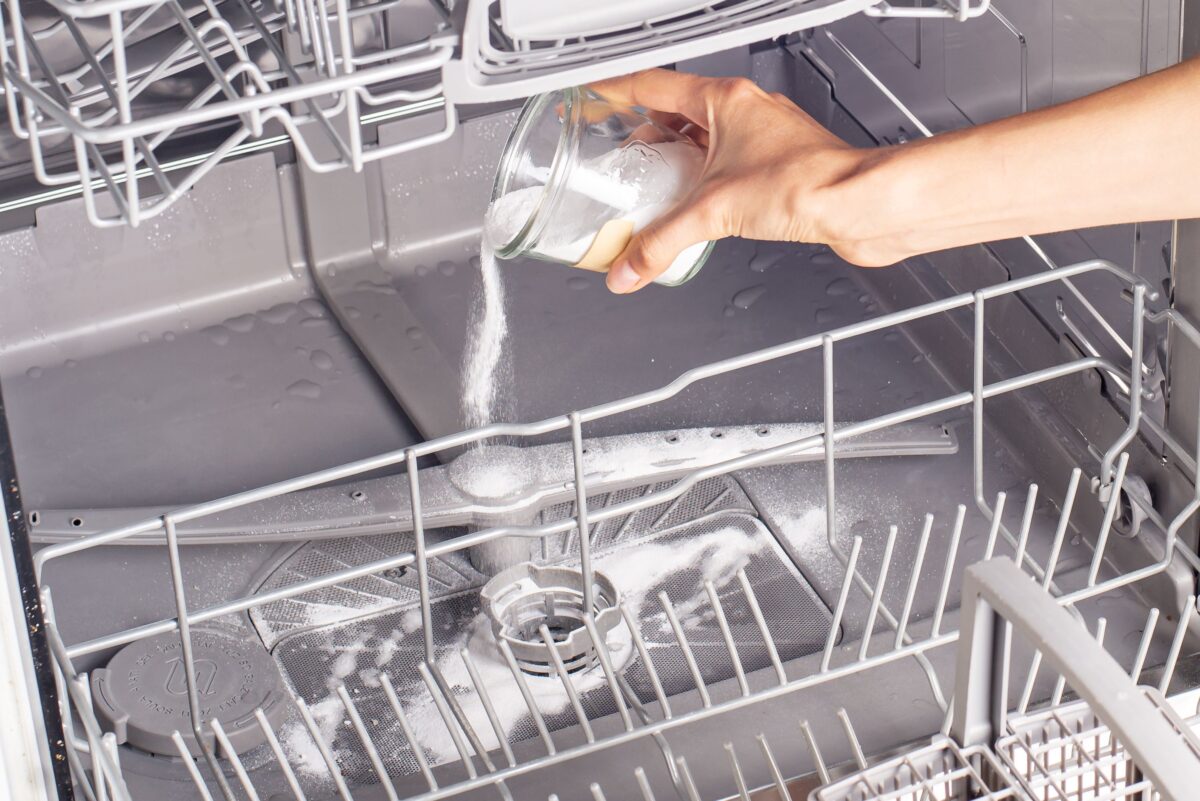
- Start by emptying the dishwasher and removing any visible debris or food particles.
- Place the descaler in the bottom of the dishwasher. If you’re using a commercial descaler, follow the manufacturer’s instructions for the amount to use.
- Close the dishwasher door and select the hottest cycle available.
Running the Dishwasher
Once you’ve added the descaler, it’s time to run the dishwasher. Here are the steps to follow:
- Start the dishwasher and let it run through the entire cycle.
- If you’re using a homemade descaler, pause the dishwasher after the first cycle and let the mixture sit in the appliance for 20-30 minutes. Then resume the cycle and let it finish.
- Once the cycle is complete, open the dishwasher and check for any remaining build up or residue.
- If there’s still build up, repeat the process with a fresh batch of descaler until the dishwasher is clean.
Dishwasher Post-Descaling Steps
After descaling your dishwasher, there are a few important post-descaling steps that you should follow to ensure that your dishwasher continues to function properly.
Rinsing the Dishwasher
After descaling your dishwasher, it is essential to rinse it thoroughly to remove any remaining descaling solution and debris.
- Fill a container with clean water.
- Use a cloth or sponge to wipe down the interior of the dishwasher, including the racks, spray arms, and interior walls.
- Rinse the cloth or sponge frequently in the clean water to ensure that you’re not simply spreading the descaling solution around.
- Run a short cycle with no dishes in the dishwasher to rinse away any remaining debris.
Inspecting the Dishwasher
After rinsing your dishwasher, inspect it carefully to ensure that it is functioning correctly. Here are a few things to look for:
- Check the spray arms to ensure that they are not clogged with debris or limescale. If they are, remove them and clean them thoroughly.
- Inspect the interior of the dishwasher for any remaining limescale or debris. If you notice any, repeat the descaling process.
- Check the dishwasher’s filter to ensure that it is clean and free of debris. If it is dirty, remove it and clean it thoroughly.
Keep a Dishwasher Descaling Routine
It’s important to maintain a regular descaling routine. Descaling helps remove limescale build up and mineral deposits that can affect the performance of your dishwasher.
- Use a descaling product: There are many descaling products available in the market that can help you clean your dishwasher. These products are specifically designed to remove limescale build up and mineral deposits. Follow the instructions on the product carefully to ensure that you get the best results.
- Use white vinegar: White vinegar is a natural descaler that can help remove limescale build up and mineral deposits. Place a cup of white vinegar on the top rack of your dishwasher and run a hot cycle. This will help dissolve the mineral deposits and eliminate odours.
- Clean the filter: The filter in your dishwasher collects food particles and debris. Over time, this can lead to a build up of limescale and mineral deposits. To prevent this, clean the filter regularly. Remove the filter and wash it under running water. Use a soft-bristled brush to remove any stubborn debris.
- Clean the spray arms: The spray arms in your dishwasher distribute water to clean your dishes. Over time, limescale and mineral deposits can clog the spray arms and affect their performance. To prevent this, remove the spray arms and clean them thoroughly. Use a soft-bristled brush to remove any build up.
- Use citric acid: Citric acid is a natural descaler that can help remove limescale build up and mineral deposits. Mix a cup of citric acid with water and run a hot cycle. This will help dissolve the mineral deposits and eliminate odours.
Safety Precautions During Dishwasher Descaling
Descaling a dishwasher may seem like a simple task, but it is important to take some safety precautions to avoid any accidents.
- Always wear rubber gloves to protect your hands from the descaling agent and hot water.
- Make sure the dishwasher is completely empty before starting the descaling process.
- Turn off the dishwasher and unplug it from the power source to avoid any electrical hazards.
- Read the manufacturer’s instructions carefully before using any descaling agent to ensure it is safe for your dishwasher.
- Do not mix different descaling agents as they may react and cause harmful fumes.
- Avoid inhaling the descaling agent or getting it in your eyes or mouth. If it accidentally gets into your eyes or mouth, rinse with plenty of water and seek medical attention immediately.
- Keep children and pets away from the dishwasher during the descaling process as the descaling agent and hot water can be hazardous.
- After the descaling process is complete, run the dishwasher through a rinse cycle to remove any remaining descaling agent before using it again.
Frequently Asked Questions
How often should I descale my dishwasher?
It is recommended that you descale your dishwasher every three to six months. However, the frequency of descaling may vary depending on the hardness of your water and the frequency of use of your dishwasher.
What is the best dishwasher descaler to use?
Some popular dishwasher descalers include Quick Descaler, Finish Dishwasher Cleaner, and Calgon.
Can I use vinegar to descale my dishwasher?
Yes, you can use vinegar to descale your dishwasher. However, it is important to use white clear vinegar and mix it with warm water in a small bowl.
How do I know if my dishwasher needs descaling?
There are several signs that indicate your dishwasher needs descaling. These include white spots or film on your dishes, a cloudy or dull appearance on glassware, and a build up of limescale on the interior of the dishwasher.

Founder of homeappliancegeek.com, avid cook, and lover of Asian food.
Signature dishes include Thai Red Curry, Chicken Saag, Bibimbap and Sushi.
Massive clean freak; a habit baked-in after spending 9 years in the catering industry.
The one appliance he couldn’t live without? Easily the dishwasher (total relationship saver!).