If you’re running a commercial kitchen, you may be wondering: does a commercial dishwasher need a grease trap?
The short answer is yes, it does. A grease trap is an essential piece of equipment for any commercial kitchen that handles fats, oils, and grease (FOG) in its cooking and cleaning processes.
The role of a grease trap is to capture FOG before it enters the sewer system. FOG can cause blockages and backups in the plumbing, leading to unpleasant odours, health hazards, and costly repairs.
Grease traps prevent these problems by intercepting FOG and separating it from the wastewater. The FOG floats to the top of the trap, where it can be skimmed off and disposed of properly.
The wastewater flows out of the trap and into the sewer system, free of FOG.
Key Takeaways
- A commercial dishwasher needs a grease trap to prevent FOG from entering the sewer system.
- A grease trap captures FOG and separates it from the wastewater.
- Grease traps prevent plumbing problems, health hazards, and costly repairs.
Does a Commercial Dishwasher Need a Grease Trap?
If your dishwasher produces a significant amount of fats, oils, and grease (FOG), you may need to install a grease trap to comply with local regulations and prevent blockages in your plumbing system.
It is essential to note that not all dishwashers are created equal. Some models are designed to remove FOG effectively, while others may struggle with it.
For instance, high-temperature dishwashers tend to produce less FOG than low-temperature dishwashers, as the hot water helps to break down the grease and prevent it from solidifying.
Role of Grease Trap In Dishwashers
If you are operating a commercial kitchen, you must be aware of the legal obligations related to the management and disposal of fats, oils, and grease (FOG) produced in the normal course of your business.
One of the essential components of a commercial kitchen’s grease management system is a grease trap.
A grease trap is a small device that captures and separates FOG from wastewater before it enters the drainage system.
The primary role of a grease trap is to prevent FOG from entering the sewer system and causing blockages and overflows.
Grease build up in the sewer system can lead to costly repairs, unpleasant odours, and environmental damage.
A grease trap helps to reduce the amount of FOG that enters the sewer system by trapping it in a container and allowing the wastewater to flow out.
A grease trap works by using gravity to separate FOG from wastewater. When the wastewater enters the grease trap, it slows down, allowing FOG to rise to the top and solid particles to settle at the bottom.
The wastewater that remains in the middle layer flows out of the grease trap and into the drainage system.
It is important to note that not all FOG can be captured by a grease trap. Some types of FOG, such as emulsified fats and oils, can pass through a grease trap and enter the sewer system.
Therefore, it is crucial to have a comprehensive grease management system that includes regular cleaning and maintenance of the grease trap, as well as proper disposal of FOG.
Mechanism of a Grease Trap
A grease trap is a plumbing device that is designed to capture and separate fats, oils and grease (FOG) from wastewater before it enters the sewer system.
A typical grease trap has a tank that is divided into two or more compartments.
The wastewater enters the first compartment, which slows down the flow of the water and allows the FOG to separate from the water.
The FOG then rises to the top of the water and is trapped in the trap, while the water flows into the second compartment and exits the trap.
The FOG that is trapped in the grease trap needs to be removed periodically to prevent it from overflowing.
This is typically done by a licensed waste hauler who will pump out the FOG and dispose of it properly.
It is important to note that not all grease traps are created equal. The UK Building Regulations (Part H 2.21) specifies that drainage serving kitchens in commercial hot food premises should be fitted with a grease separator complying with EN 1825-1 and designed in accordance with EN 1825-2 or other effective means of grease removal.
This means that the grease trap must comply with specific standards and regulations to ensure that it is effective in removing FOG from wastewater.
Importance of a Grease Trap in Commercial Dishwashers
Preventing Pipe Blockages
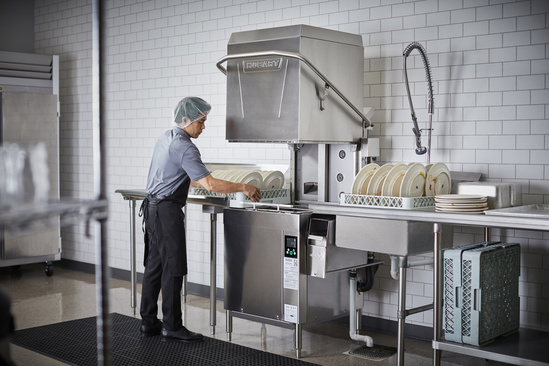
When you operate a commercial dishwasher, it’s essential to have a grease trap installed.
Without a grease trap, the wastewater from your dishwasher can contain a significant amount of grease, oil, and food debris.
This can cause blockages in your pipes, leading to expensive repairs and downtime.
By installing a grease trap, you can capture these contaminants before they enter your pipes.
The grease trap will separate the wastewater from the grease, oil, and food debris, allowing the clean water to flow freely through your pipes and preventing blockages.
Environmental Impact
In addition to preventing pipe blockages, installing a grease trap in your commercial dishwasher is also essential for the environment.
When grease, oil, and food debris enter the sewer system, they can cause significant damage to the environment.
These contaminants can harm aquatic life, pollute waterways, and contribute to the growth of harmful bacteria.
By installing a grease trap, you can prevent these contaminants from entering the sewer system, protecting the environment and promoting sustainability.
Legal Requirements
Finally, it’s essential to note that installing a grease trap in your commercial dishwasher is often a legal requirement.
In the UK, there are strict regulations governing the management of fats, oils, and grease (FOG) in the food industry.
These regulations require commercial kitchens to install grease traps and properly manage FOG to protect the environment and public health.
Failure to comply with these regulations can result in significant fines and legal consequences.
By installing a grease trap in your commercial dishwasher, you can ensure that you’re meeting these legal requirements and protecting your business from potential liability.
Choosing the Right Grease Trap for a Commercial Dishwasher
There are several factors to consider. First and foremost, you need to ensure that the grease trap is the right size for your dishwasher and has the capacity to handle the amount of grease and food waste that your dishwasher produces.
One type of grease trap to consider is a gravity grease trap. These large, in-ground containers use gravity to separate grease from your water supply.
They have a high initial cost and must be pumped on a regular basis, but feature large capacities that are ideal for high-volume needs.
Another option is a hydromechanical grease interceptor.
These are designed to handle high-temperature mixture of FOG, solids, water, and surfactants from excess detergent that is produced by dishwashers.
Testing has shown that higher temperatures actually assist in separation performance in hydromechanical grease interceptors.
It’s also important to consider the material of the grease trap. Stainless steel is a popular choice due to its durability and resistance to corrosion.
However, plastic grease traps may be more cost-effective and easier to install.
Installation and Maintenance of Grease Traps

If you have determined that your commercial dishwasher needs a grease trap, it is important to ensure that it is installed and maintained properly.
Installation
When installing a grease trap, it is important to follow all relevant regulations and guidelines. This may include obtaining permits, ensuring proper sizing and placement, and using approved materials.
Here are some general steps to follow when installing a grease trap:
- Choose the appropriate type and size of grease trap for your needs.
- Determine the best location for the grease trap, taking into account factors such as accessibility, plumbing connections, and proximity to the dishwasher.
- Install the grease trap according to the manufacturer’s instructions and any applicable regulations.
- Test the grease trap to ensure that it is working properly before using the dishwasher.
Maintenance
Proper maintenance of a grease trap is crucial for ensuring that it continues to function effectively. Neglecting maintenance can lead to clogs, odours, and other issues.
Here are some tips for maintaining a grease trap:
- Schedule regular cleaning and maintenance according to the manufacturer’s recommendations and any applicable regulations.
- Train staff on proper use and maintenance of the grease trap.
- Monitor the grease trap regularly for signs of problems, such as slow drainage or foul odours.
- Keep accurate records of maintenance and cleaning activities.
Final thoughts
It is important to note that connecting your commercial dishwasher to a grease trap can help prevent blockages and clogs in your drainage system.
Grease traps collect fats, oils, and grease from individual devices before entering the sewer system, causing clogs and backups.
Therefore, it is recommended that you consult with a professional to determine the best grease management solution for your specific needs.
In summary, whether or not you need a grease trap for your commercial dishwasher depends on your local regulations and the volume of grease produced by your kitchen.
It is essential to ensure that your kitchen is compliant with the relevant regulations to prevent any legal issues.
Frequently Asked Questions
Are there any alternatives to using a grease trap with a commercial dishwasher?
Yes but they may not be as effective. For example, you could install a filter system that captures food particles and grease.
However, these systems may not be able to handle the volume of grease produced by a commercial dishwasher, and they may need to be cleaned more frequently.
How often should a grease trap be cleaned in a commercial dishwasher?
The frequency of cleaning will depend on the size of the grease trap and the volume of grease produced by the dishwasher.
In general, a grease trap should be cleaned at least once a month.
However, if the trap is small or if the dishwasher produces a large amount of grease, it may need to be cleaned more frequently.
Can a commercial dishwasher operate without a grease trap?
Technically yes, however, it is not recommended. Grease traps are designed to capture fats, oils, and grease before they enter the sewer system, where they can cause damage and harm.
Without a grease trap, the health and safety of the establishment may be compromised, and the business may be in violation of local regulations.
Therefore, it is important to install a grease trap and to maintain it properly.

Founder of homeappliancegeek.com, avid cook, and lover of Asian food.
Signature dishes include Thai Red Curry, Chicken Saag, Bibimbap and Sushi.
Massive clean freak; a habit baked-in after spending 9 years in the catering industry.
The one appliance he couldn’t live without? Easily the dishwasher (total relationship saver!).