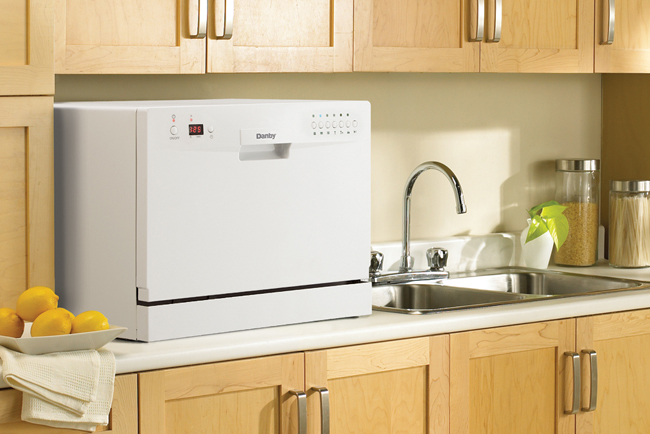
Can you install a countertop dishwasher under the sink?
As kitchen spaces become smaller, especially in urban areas, it’s essential to make the most of every square inch.
While countertop dishwashers are designed to be compact and versatile, fitting them under the sink may be an attractive solution for those with limited space.
Installing a countertop dishwasher beneath the sink can be a viable option for small kitchens, particularly if you have a single bowl sink. This way, you can utilise the space that would have been taken up by a double under-sink unit.
However, you’ll need to take into account several factors like plumbing connections, positioning, and selecting the right dishwasher model for your situation.
Key Takeaways
- Countertop dishwashers can be installed under the sink in small kitchens with careful planning.
- Consider factors such as plumbing connections, positioning, and selecting the right model.
- Proper installation can lead to an efficient and space-saving solution for limited kitchen spaces.
Types of Countertop Dishwashers
There are various types of countertop dishwashers that you can choose from, depending on your needs and preferences.
Some are designed specifically for installation under the sink, while others are intended for placing on the kitchen counter.
Freestanding Countertop
The first type of countertop dishwasher is the freestanding unit. This dishwasher can be placed on your kitchen worktop and doesn’t require any alteration to your kitchen cabinetry or plumbing.
It usually has a compact design and is perfect for individuals with limited kitchen space.
These dishwashers often come with multiple wash programs and adjustable racks to suit your requirements.
Under Sink Dishwasher
This type of dishwasher utilises the space efficiently, provided you have a single-bowl sink, and allows you to have your dishwasher right next to your sink. It is essential to ensure the unit is compatible with your kitchen plumbing before installation.
As you assess your countertop dishwasher options, make sure you consider factors like size, functionality, and appearance.
Researching various models and reading user reviews can be immensely helpful in making an informed decision.
Where Do I Put My Countertop Dishwasher?
When considering where to put your countertop dishwasher, there are a few key factors to keep in mind. First and foremost, your dishwasher will need access to a water supply and drainage system. This means placing it near a faucet and sink is essential.
Your countertop dishwasher should be placed in a convenient location where the inlet hose can easily connect to the water source, such as a faucet. This ensures that clean water is efficiently supplied to the appliance.
Additionally, you must ensure that the outlet hose can efficiently reach your drainage system, so that dirty water is cleared out properly.
It is worth noting that, although countertop dishwashers are designed to be placed on top of countertops, some homeowners may still want to install them under the sink.
If you decide to go this route, make sure your dishwasher will fit snugly within the dimensions of the space underneath your sink.
Keep in mind that you may need to make level adjustments on the feet of the dishwasher or remove the adjusters to fit the appliance into a tight space.
In some cases, you might even need to use a rasp or float file to make small adjustments to the bottom of the counter.
Once you have identified the perfect spot for your dishwasher, make sure that you allocate enough space around it to accommodate door movement and provide access for maintenance.
This ensures that your countertop dishwasher operates optimally and can be easily maintained over time.
Pros and Cons of Under-Sink Installation

Space Utilisation
Pros: Installing a countertop dishwasher under the sink can save valuable space in your kitchen. This way, the dishwasher is tucked away, freeing up counter space for food preparation and other tasks.
Cons: Although this method saves space horizontally, it may not leave enough room for hot water pipes or other plumbing fixtures. you may also find it inconvenient to access the dishwasher when the cabinet door is closed.
Ease of Installation
Pros: An under-sink installation may be a viable option if your kitchen layout allows for it. The proximity to the sink and necessary plumbing connections can simplify the installation process.
Cons: However, it is not the most straightforward method for installing a countertop dishwasher, as it typically requires modifications to your cabinetry and countertop. You may also need to consider sturdy support for the dishwasher, as countertops are not always designed to bear the weight of appliances beneath.
Plumbing and Electrical Requirements
Pros: When it comes to plumbing and electrical requirements, an under-sink installation can be advantageous, as the dishwasher’s intake and outlet hoses can readily connect to the water source and drainage system of your sink. This makes it relatively simple to hook up the necessary connections.
Cons: On the other hand, placing a countertop dishwasher under the sink can lead to an increased risk of condensation build-up, potentially causing mould and damage to your cabinetry or countertop. If not properly installed, you may face issues with the hoses’ connection or drainage capabilities.
Selecting the Right Countertop Dishwasher Model
Size and Dimensions
When choosing a countertop dishwasher to install under your sink, it’s essential to consider the size and dimensions. Measure the available space underneath your sink and compare it to the dishwasher’s dimensions.
Make sure there is sufficient clearance for connections, piping and any required ventilation. It’s a good idea to opt for a single-bowl sink, which will provide more room for the dishwasher as well as the sink’s piping.
Connection Compatibility
In addition to considering size and dimensions, you also need to ensure that your chosen dishwasher model is compatible with your existing plumbing, electrical and drainage systems.
A countertop dishwasher typically requires a connection to a water supply, electrical outlet, and drainage system.
To make sure your dishwasher will work efficiently under your sink you need to:
- Check your water supply valves and ensure they are compatible with the dishwasher’s intake hose.
- Ensure the power outlet is nearby and complies with the dishwasher’s voltage and electrical requirements.
- Confirm that the dishwasher’s drainage hose can be connected to your sink’s drain system without causing obstructions or leaks.
Positioning Your Countertop Dishwasher
First and foremost, make sure to measure the available space under your sink accurately. This is crucial as it will determine the size and model of dishwasher you can install.
To accommodate the dishwasher, you might need a single bowl sink if you don’t already have one. This will allow the dishwasher to sit where the under-sink double unit would have been, beneath the countertop and to the side of the sink bowl and pipe.
Keep in mind that specific dishwashers are designed to fit under the sink, having a slightly different profile than regular ones.
They tend to dip down lower in the back, allowing them to fit under the sink without compromising their functionality. Before purchasing a dishwasher, confirm that its dimensions are suitable for your under-sink space.
Ensure that you have access to the necessary water supply and drainage connections as well as electrical outlets. This is essential for the proper installation and operation of your dishwasher.
It’s always best to consult with a professional plumber or electrician if you’re unsure about any connections.
Another aspect to consider is the workflow in your kitchen. Positioning the dishwasher right beside the sink is often preferred, as it allows easy access for rinsing and loading dishes.
If possible, choose a location that enables more than one person to load the dishwasher, making the process more efficient and enjoyable.
Countertop Dishwasher Installation Process

Preparing the Area
Clear all clutter and objects in the cabinet under the sink. You’ll want to have adequate space to work on this project.
Secondly, measure the dimensions of the dishwasher to ensure it can fit under the sink comfortably. If you are unsure about plumbing your dishwasher, check out How To Plumb-in and Install a Table Top Dishwasher for further guidance.
Mounting
When you’re ready to start with the mounting process, it’s essential to follow the manufacturer’s instructions for securing the dishwasher in place.
Position the dishwasher under the sink and ensure it is level. You may need to use shims or adjustable legs to achieve a flat surface. Double-check the location of the dishwasher, making sure it does not interfere with the sink’s pipes or other essential components.
Connecting
Begin by connecting the water intake hose to the faucet. You can usually do this by attaching the hose adaptor directly to the faucet’s threads. Ensure that the connection is secure and leak-free.
Next, connect the dishwasher’s outlet hose to the drainage system. This could be done by connecting it to the sink’s drain pipe or a dedicated dishwasher waste pipe.
Finally, plug in the power cord to a nearby electrical socket. Keep an eye on the hoses and power cord, ensuring they’re not kinked or tangled, which could cause damage or reduced efficiency.
Wrap Up
Installing a countertop dishwasher under the sink is indeed a possibility, but it may not be ideal or recommended in every situation.
Nevertheless, their compact size and design allow for flexibility and adaptability when facing kitchen space limitations.
To ensure a successful installation, carefully measure the clearance of your kitchen sink, taking into account the hot water pipes and depth of the sink.
This will help you to find a countertop dishwasher model that is most compatible with your space, preventing any issues that may arise during installation.

Founder of homeappliancegeek.com, avid cook, and lover of Asian food.
Signature dishes include Thai Red Curry, Chicken Saag, Bibimbap and Sushi.
Massive clean freak; a habit baked-in after spending 9 years in the catering industry.
The one appliance he couldn’t live without? Easily the dishwasher (total relationship saver!).