Do you need an air gap installed for your dishwasher to prevent cross-contamination from the rest of the drains in your home?
That is a good question and needs to be investigated if you want to add a dishwasher to the kitchen appliances in your home.
We will take a look at what an air gap is and how it will be beneficial for your dishwasher at home.
We will also take a look at how to use an air gap to make your dishwasher a much safer appliance to use.
Read on and find out what an air gap is used for and how it will improve your home environment when used with a dishwasher.
Table of Contents
What Is a Dishwasher Air Gap?
An air gap is a small device or gadget which is mounted above the countertop in your kitchen to prevent contamination of your dishwasher.
It will prevent dirty water from flowing back into the dishwasher and keep it much more hygienic for your safety.
This reverse flow can easily happen if there are blocked drains in your home and the water flows back into the dishwasher instead of down the drain.
The dishwasher air gap works the same way as an anti-return flow device to prevent the dirty water from running back into the dishwasher.
It will also ensure that only a clean water supply is flowing into the dishwasher to prevent any bacteria from building up inside it.
How Does Backflow Work
Backflow is a problem that can occur with dishwashers when there is a sudden change in water pressure.
It happens when water flows back into the dishwasher from the sink drain, carrying with it contaminants and bacteria that can make you sick.
When a dishwasher drains, it creates a siphon that pulls water out of the machine and into the drain.
However, if there is negative pressure in the drain, the siphon can be broken, and contaminated water can be siphoned back into the dishwasher.
This is where an air gap comes in. An air gap is a simple device that creates a physical gap of air between the dishwasher and the sink drain.
This gap prevents contaminated water from flowing back into the dishwasher and contaminating your dishes.
Without an air gap, there are other means of backflow prevention, such as a check valve. However, these are not as effective as an air gap.
Check valves can fail over time, whereas an air gap is a simple mechanical device that is less prone to failure.
Do You Need an Air Gap For Your Dishwasher?
It is safe to install an air gap with the initial dishwasher installation so you will have a clean water supply from the word go.
If you do that, you do not need to worry about contaminated water when using your dishwasher to clean the dishes.
You may never know when the sink drain may become blocked unexpectedly and not drain the water as it should.
In many cases, the plumbing codes of most areas require that an air gap be installed between the home drain and a dishwasher.
The most simple air gap that is often installed for dishwashers consists of a loop method to prevent the backflow of the water.
Others use a simple vertical pipe installed in the drain hose that prevents the water from going back and only forward or down.
Standard air gaps are mostly made with a double leg inflow and outflow to prevent any backflow from the drainpipe.
It is better to connect the hose of the air gap to the garbage disposal for a clean and proper working system.
What Is A Dual Inlet Air Gap?
A dual inlet air gap is a device used in plumbing systems to prevent wastewater from flowing back into the water supply.
It is commonly used in dishwashers that require separate drain lines from the top and bottom compartments of the machine.
With a dual inlet air gap, it is possible to run two dishwashers to one drain line through a single air gap or drain both a dishwasher and a water filtration system concurrently.
This device has twin inlets that can conveniently connect both units to the sink tailpiece or garbage disposal for draining.
The top of the air gap has a finished cap and pops 2 inches above the sink’s rim.
It creates an unpressurized gap of air between the dishwasher drain hose and the sink drain line/garbage disposal to prevent backflow, contamination, and an overflowing dishwasher.
Here are some key features of a dual inlet air gap:
- It is a small device that is easy to install and maintain.
- It is designed to comply with plumbing codes and regulations.
- It is available in different sizes and styles to fit various plumbing configurations.
- It is an essential component of a plumbing system to prevent cross-contamination and protect the water supply.
How Does a Dishwasher Air Gap Work?
An air gap simply separates the hose from the dishwasher from the hose that leads to the garbage disposal or drains.
When the dishwasher pumps water out, it is pumped to the air gap and is removed by the drain hose to the drain.
This system removes the food particles from the water so that it does not interfere with the normal flow of the water.
This action means the filthy water from a blocked drain can not flow back into the dishwasher to contaminate it with old food and bacteria.
Water will not overflow from the air gap into the dishwasher hose, keeping it safe from any backflow of filthy water.
So no dirty drain water will ever get back to your dishwasher and thus you are left with a safe option to wash your dishes.
Dishwasher Air Gap Maintenance
To keep the dishwasher safe, you still need to keep the air gap clean on a regular basis to prevent bacteria build-up.
Anyone can do this cleaning in a few simple steps. Just follow these instructions to clean a standard air gap on your dishwasher.
- Remove the chrome cover located at the top of the air gap
- Next, you should unscrew the plastic cap of the air gap
- Remove all materials and dirt that accumulated inside the air gap
- Clean it out by rinsing it with clean water
- Make sure the air gap fitting is clean from any material
- Check the hose of the air gap from the dishwasher to the drain or garbage disposal to make sure it is not blocked
- It is good practice to check for any leaks after you have cleaned it to keep it in an excellent working condition
- Make sure that you have removed all materials inside the air gap to prevent unpleasant odors in the future

Importance Of an Air Gap
If you experience any water flooding while you use your dishwasher, it is time to install an air gap for the dishwasher.
It is also required by most plumbing codes to have an air gap installed in your house when you install a new dishwasher.
Dishwasher Air Gap Alternatives?
If it appears that your air gap does not work as it should, there are always other ways to keep your dishwasher safe.
You can use a high loop in the hose of your dishwasher to prevent the drain water from flowing back into the dishwasher.
It will create a closed-loop system in the water between the dishwasher and the drain and is very easy to install.
This high loop can be installed inside the kitchen sink cabinet to keep it out of the way and out of the eye.
When installed just below the kitchen sink, it will easily keep the filthy drain water away from your dishwasher.
Dishwasher standpipe
A standpipe is a vertical pipe that extends from the floor to the wall and is used to connect the dishwasher drain hose to the plumbing.
It is an alternative to the dishwasher air gap and is commonly used in situations where the air gap is not required by plumbing codes.
The standpipe is designed to prevent backflow from the drainage system into the dishwasher by creating a barrier between the two.
It is an effective way to protect the dishwasher from clogs and other drainage issues that can arise from a faulty drainage system.
When installing a standpipe, it is important to ensure that it is the correct height. The standpipe should be at least 18 inches tall, but no more than 30 inches tall.
This ensures that there is enough space for the dishwasher drain hose to loop up and over the top of the standpipe, creating a high loop.
The high loop is crucial because it prevents water from flowing back into the dishwasher if there is a clog or other issue in the drainage system.
It acts as a check valve, allowing water to flow out of the dishwasher but not back in.
If a standpipe is used instead of an air gap, it is important to ensure that the standpipe is properly installed and maintained.
Over time, standpipes can become clogged with food debris and other materials, leading to drainage issues and potential damage to the appliance.
Do Dishwashers Come With an Air Gap?
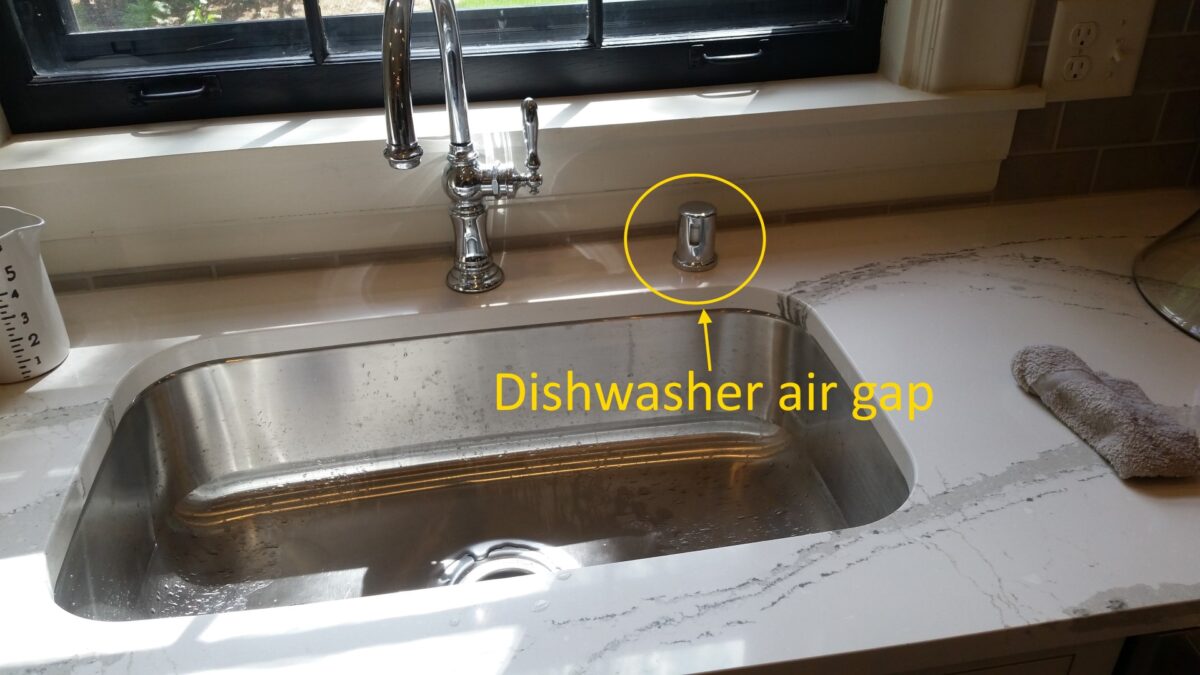
Some dishwashers out there are made with an air gap attached to the dishwasher drain hose to make it easier.
In most cases, the air gap is located at the top of the sink of your house and is covered with a small chrome cap.
But it is not really part of the dishwasher, so you need to attach the air gap to the dishwasher hose yourself.
You can also ask the technician who initially installed the dishwasher to install an air gap in your home.
How Do I Clear My Dishwasher Air Gap
Here’s how to clear a clogged dishwasher air gap:
- Remove the air gap cover: The first step in cleaning the dishwasher air gap is to remove the cover. Depending on the design of your air gap, this may require unscrewing the cover or simply pulling it off.
- Clear any visible debris: Once the cover is removed, you should be able to see down into the air gap. Use a toothbrush or other small brush to clear away any visible debris that has accumulated in the gap.
- Flush with water: After clearing away any visible debris, it’s time to flush the air gap with water. You can do this by filling a cup with water and pouring it into the air gap. Repeat this process several times until the water flows freely through the air gap.
- Check the hose: Finally, it’s a good idea to check the hose that connects the air gap to the garbage disposal or sink drain. If this hose is clogged, it can also cause water backup in the dishwasher. Use a flashlight to inspect the hose and clear away any debris that you find.
It’s a good idea to perform this maintenance task at least once a year to ensure that your dishwasher is working properly.
Should water come out of the air gap
The answer is yes
When the dishwasher is draining, water should flow through the air gap and out of the vent holes.
If water is not flowing out of the air gap, it means that the air gap is clogged, and the dishwasher may not be draining properly.
It is important to note that the water coming out of the air gap should be clean. If the water is dirty or has debris in it, it means that there is a problem with the dishwasher’s drain water.
In such cases, homeowners should inspect the dishwasher’s drain hose and garbage disposal to ensure that they are not clogged.
If the air gap is leaking, it may be due to several reasons. One common cause is a clogged air gap fitting.
In such cases, homeowners can use a bottle brush and household disinfecting cleaner to clean the air gap.
Another reason for air gap leaks is a faulty branch or a loose connection. In such cases, homeowners may need to replace the branch or tighten the connections.
Dishwasher Air Gap Installation
If you like to do things for yourself, you can always install an air gap in your kitchen sink if you are one of those people.
It is a simple job and can be done without the help of a technician. Just follow the steps indicated here:
- First, you will need to find the air gap hole located in the kitchen sink. The hole might be covered with a plastic disk.
- Remove the disk to expose the hole of the air gap where you need to install it.
- If there is no air gap hole in the sink, you need to drill a 1 ⅜-inch hole in the countertop.
- Make sure you drill the hole very close to the rim of the kitchen sink.
- In the case of a marble countertop, you will need the help of a professional to drill the hole.
- Connect the air gap connection with the actual fitting on the dishwasher hose.
- The gap connector can be installed by connecting an ⅝ inch pipe to the same size leg of the air gap.
- Use a stainless steel clamp to secure the pipe to the leg of the air gap.
- Secure the other leg of the air gap to the house of the garbage disposal unit or to the drainpipe of the kitchen sink.
- If you connect it directly to the drain, protect the hose with a hose clamp.
- A dishwasher air gap fitting is the same standard size no matter what brand you buy.
- When you are done connecting the hoses, you can now push the air gap through the air gap hole from below.
- Anybody can do this by removing the cover from the air gap, so it will easily fit through the hole.
- You can thread the nut of the air gap so you can tighten it against the counter.
- Ask someone to hold it in position while you tighten it, so it does not spin.
- With the use of the right-sized wrench, you can now wholly tighten it to stabilize it.
- Replace the cap of the air gap, and you are ready to use it.
To test if your installation works appropriately, use the dishwasher on full cycle and look for leaks with the air gap and tubing.
Can i install an air gap under the counter
Yes you can
An under counter air gap is a type of air gap that is mounted under the counter, and it is used to prevent backflow of wastewater into the dishwasher.
However, before you install an under counter air gap, it is important to check your local plumbing codes to ensure that it is allowed.
In some areas, local building codes may require that air gaps be installed on the countertop, rather than under the counter.
If you are unsure about whether you need an air gap or where to install it, it is always best to consult with a licensed plumber or building inspector.
They can provide you with expert advice on the plumbing codes in your area and help you determine the best location for your air gap.
How much does it cost to install
If a professional plumber is required, the cost can increase significantly.
The cost of hiring a professional plumber can range from £40 to £150 per hour, depending on the experience and location of the plumber.
The installation may take anywhere from one to three hours, which can add up quickly.
The cost of the air gap itself can also vary. An air gap can cost anywhere from £10 to £50, depending on the type and quality of the air gap.
A new dishwasher may come with an air gap already included, so it’s important to check if this is the case before purchasing a separate air gap.
If affordability is a concern, there are alternatives to installing an air gap. One option is to install a high loop in the dishwasher drain hose.
This is a simple and affordable solution that can be done without the help of a professional plumber.
Another option is to install a check valve, which can also be an affordable alternative to an air gap.
Summary
It’s would be best to have an air gap installed for your dishwasher to keep it safe from contamination from a blocked drain.
It is also part of the plumbing code to have an air gap installed to protect your family from illness and keep your home safe.
It is always good to stay within the rules that apply to all types of building codes for your own protection.
Related Articles:
- How to Clean Mold From Dishwasher Drain
- How to Plumb a Dishwasher Easily!
- What Is The Symbol For Dishwasher Safe (Full Guide)

Founder of homeappliancegeek.com, avid cook, and lover of Asian food.
Signature dishes include Thai Red Curry, Chicken Saag, Bibimbap and Sushi.
Massive clean freak; a habit baked-in after spending 9 years in the catering industry.
The one appliance he couldn’t live without? Easily the dishwasher (total relationship saver!).