Wondering why your washing machine has low pressure
If you’ve noticed that your washing machine isn’t filling up with as much water as it used to, you may be experiencing low water pressure.
This can be a frustrating issue to deal with, as it can lead to longer wash times and less effective cleaning.
Fortunately, there are a number of potential causes for low water pressure, as well as steps you can take to identify and fix the problem.
Understanding how water pressure works in washing machines is an important first step in diagnosing and fixing low pressure issues.
Your washing machine relies on a steady flow of water to fill up the drum and clean your clothes effectively.
If the water pressure is too low, the machine may not be able to fill up all the way, leading to subpar cleaning results.
Additionally, low water pressure can cause the machine to take longer to fill up, leading to longer wash times and increased energy usage.
There are a number of potential causes for low water pressure in washing machines, ranging from clogged filters to issues with the water supply itself.
Identifying the root cause of the problem is key to fixing it effectively.
In the next section, we’ll explore some of the common causes of low water pressure in washing machines, as well as steps you can take to address them.
Key Takeaways
- Low water pressure can lead to longer wash times and less effective cleaning in your washing machine.
- Understanding how water pressure works in washing machines is important for diagnosing and fixing low pressure issues.
- Common causes of low water pressure in washing machines include clogged filters and issues with the water supply.
Understanding Low Water Pressure In Washing Machines
When it comes to washing machines, water pressure is a critical factor that determines how effectively your machine cleans your clothes.
Water pressure is the force at which water is supplied to your home, and it is measured in bars. A washing machine typically requires a minimum water pressure of 1 bar to function correctly.
If your washing machine has low water pressure, it can cause a range of problems, including reduced fill levels, increased cycle times, and even malfunctioning.
It is essential to understand the causes of low water pressure and how to address them.
One common cause of low water pressure in washing machines is a problem with the water supply.
If your home has an old or inadequate plumbing system, it may not provide enough water pressure to your washing machine.
In this case, you may need to upgrade your plumbing system to increase the water pressure.
Another cause of low water pressure is a blockage in the water flow.
This can be caused by a build-up of limescale or debris in the pipes. To address this issue, you can try cleaning the pipes or using a descaling solution.
It is also possible that the washing machine itself is causing low water pressure.
If the machine’s inlet valve is faulty or clogged, it can restrict the water flow and cause low water pressure. In this case, you may need to replace the inlet valve.
Causes Of Low Water Pressure
If you are experiencing low water pressure in your washing machine, there could be several reasons behind it. Here are some of the most common causes of low water pressure:
Faulty Water Inlet Valve
A faulty water inlet valve can cause low water pressure in your washing machine.
This valve is responsible for allowing water to flow into the machine, and if it is not functioning correctly, it can restrict the flow of water and cause low pressure.
Blocked Screen
The screen on the water inlet valve can become clogged with debris over time, which can restrict the flow of water and cause low pressure.
It is essential to clean this screen periodically to ensure that water can flow freely into the machine.
Kinked Or Clogged Hoses
Kinked or clogged hoses can also cause low water pressure in your washing machine.
Check the hoses leading to and from the machine to ensure that they are not bent or kinked and that there is no debris blocking the flow of water.
Issues With Plumbing System
Problems with your plumbing system can cause low water pressure throughout your home, including in your washing machine.
If you are experiencing low pressure in other areas of your home, it is essential to have your plumbing system checked.
Low Pressure In Water Supply
If the water supply to your home has low pressure, it can also cause low water pressure in your washing machine. Contact your water supply company to check if there are any issues with the supply.
Faulty Lid Switch
A faulty lid switch can also cause low water pressure in your washing machine. This switch is responsible for ensuring that the lid is closed before the machine can begin filling with water.
If the switch is not working correctly, it can prevent water from flowing into the machine.
Implications Of Low Water Pressure On Machine Performance

If you have been experiencing low water pressure in your washing machine, it can have significant implications on the machine’s performance.
Here are some of the effects of low water pressure on your washing machine:
Increased Cycle Times
One of the most significant effects of low water pressure on your washing machine is that it can increase the cycle times.
When the water pressure is low, the machine takes longer to fill up, and this can result in longer cycle times.
This means that your washing machine will take longer to complete a wash cycle, and you may have to wait longer to get your clothes clean.
Reduced Fill Levels
Low water pressure can also result in reduced fill levels in your washing machine.
When the water pressure is low, the machine may not fill up to the required level, and this can result in poor washing performance.
This means that your clothes may not be as clean as they should be, and you may have to run the machine again to get them clean.
Poor Performance
Low water pressure can also affect the performance of your washing machine. When the water pressure is low, the machine may not be able to generate enough power to clean your clothes properly.
This can result in poor washing performance, and your clothes may not be as clean as they should be.
Modern Washing Machines
Modern washing machines, especially high-efficiency washers, are designed to use less water than traditional machines.
However, they still require a certain amount of water pressure to function properly.
If the water pressure is too low, the machine may not be able to function as it should, and this can result in poor washing performance.
Spin Cycle
Low water pressure can also affect the spin cycle of your washing machine. When the water pressure is low, the machine may not be able to spin your clothes properly, and this can result in wet clothes.
This means that you may have to run the machine again to get your clothes dry.
Identifying And Fixing Low Pressure Issues
If you have noticed that your washing machine is not filling up with enough water or taking longer than usual to complete a cycle, it may be due to low water pressure.
Investigating The Problem
Before you start any repairs, it is important to investigate the problem to determine the cause of the low pressure.
Check if the low pressure is only affecting the washing machine or if it is a problem throughout the house.
If it is only affecting the washing machine, then the issue is likely with the machine itself.
If the low pressure is affecting the whole house, then it could be a problem with the main water supply.
Checking Water Supply And Flow
One of the most common causes of low water pressure in washing machines is a clogged water inlet screen or valve screen.
Check these screens for any debris or build-up and clean them if necessary. You should also check the inlet hose and pipes for any blockages.
If the screens and hoses are clear, then the issue may be with the water supply or flow. Check the water supply valve to ensure it is fully open and that the water pressure is sufficient.
You can also check the water pressure using a pressure gauge.
Cleaning Or Replacing Components
If you have identified a clogged water inlet screen or valve screen, you can clean them using a soft brush and warm water.
If the screens are damaged or beyond cleaning, then you will need to replace them.
After checking the hoses and pipes for blockages, you can try to clear it using a plumber’s snake or a high-pressure water jet. If the blockage is severe, you may need to replace the affected components.
Contacting A Professional Plumber
If you have tried all of the above steps and are still experiencing low water pressure, then it may be time to contact a professional plumber.
They will be able to identify and fix any issues with the main water supply or any other plumbing issues that may be affecting the water pressure.
Preventing Low Water Pressure In The Future
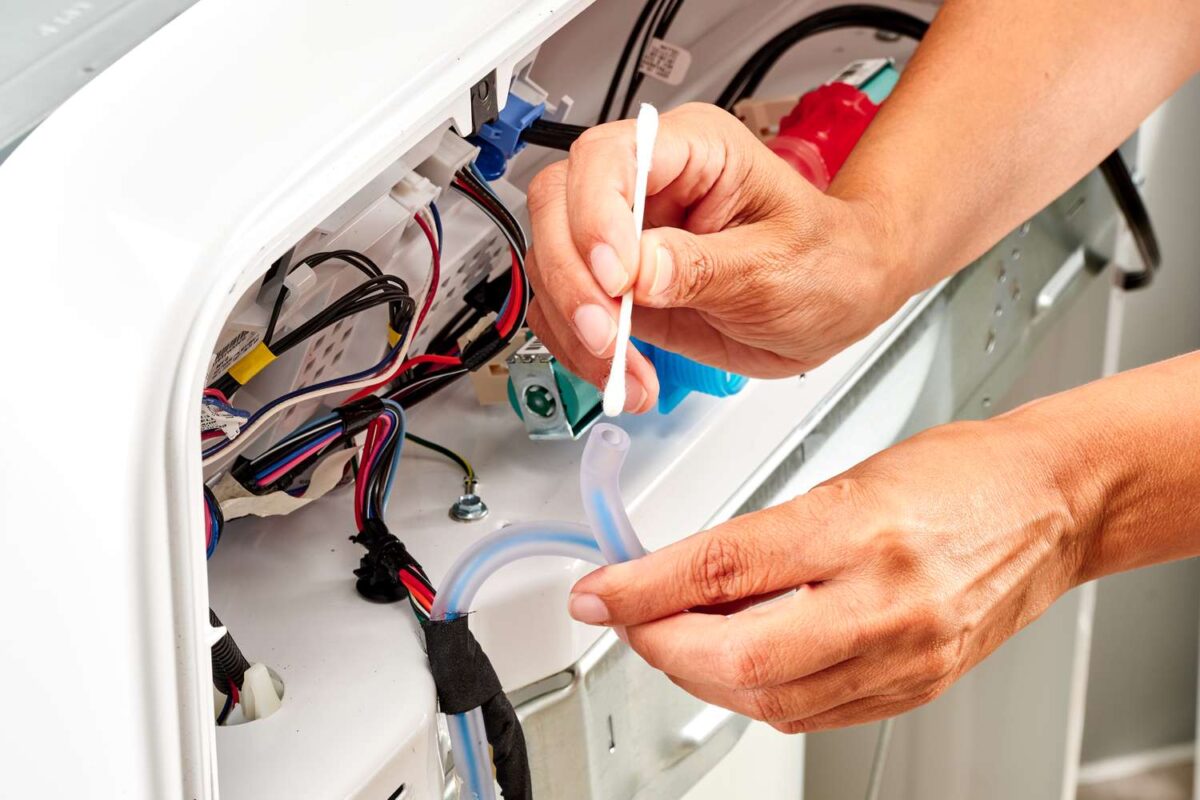
To prevent low water pressure in your washing machine, there are a few things you can do.
Firstly, check your water level switch to make sure it is working properly. If it is not, it can cause the machine to fill with too much or too little water, leading to low pressure.
Next, check your faucets and water lines for any leaks or blockages. These can also cause low pressure in your washing machine.
Mineral deposits can build up in the water lines over time, so it’s a good idea to clean them out regularly.
You should also check your pressure gauge to make sure it is working properly. If it is not, it may not accurately reflect the pressure in your water supply.
If you have a water pressure regulator, make sure it is set at the correct pressure for your home. This can help to prevent low pressure in your washing machine.
It’s also a good idea to check your main water supply for any issues. If there are problems with the supply, it can cause low pressure throughout your home.
If your washing machine has a pressure switch, make sure it is working properly.
This switch is responsible for detecting the water level in the machine and adjusting the pressure accordingly.
Some washing machines have safety features that can cause low pressure if they are activated.
Check your machine’s manual to see if there are any safety features that may be causing the issue.
If none of these solutions work, you may want to consider installing a water pressure booster or water filter.
These can help to increase the pressure in your water supply and prevent low pressure in your washing machine.
By taking these steps, you can help to prevent low water pressure in your washing machine and keep it running smoothly.
Modern Technologies To Combat Low Water Pressure
If you are experiencing low water pressure in your washing machine, there are several modern technologies that can help you combat this issue. Some of these technologies include:
Booster Pumps
Booster pumps are devices that can help increase water pressure by boosting the flow of water from the mains supply.
These pumps can be installed in your home to help increase water pressure to your washing machine.
Software
Modern washing machines are equipped with software that can detect low water pressure and adjust the machine’s settings accordingly.
This means that the machine can still function even with low water pressure.
Zero Pressure Fill
Some modern machines have a zero pressure fill feature that allows the machine to fill up even with zero water pressure.
This feature ensures that the machine can still function even in areas with very low water pressure.
Net Zero Pressure
Net zero pressure is a technology that ensures that the water pressure in your washing machine is always at a consistent level.
This technology is achieved by using a combination of sensors and valves that regulate the water flow rate.
High Water Pressure
If you have high water pressure in your home, you can install a pressure reducing valve to help regulate the water pressure.
This will help prevent damage to your washing machine and other appliances.
Hot And Cold Water Valves
Modern washing machines are equipped with hot and cold water valves that can help regulate the water temperature.
These valves can also help regulate the water pressure to ensure that the machine operates efficiently.
Water Flow Rate
The water flow rate is the amount of water that flows through your washing machine per minute.
If you have low water pressure, you can increase the water flow rate by installing a larger fill valve.
Mains Water Supply
If you are experiencing low water pressure, you can contact your local water authority to check the water pressure in your area.
If the water pressure is low, you can request that the water authority increase the pressure to your home.
By utilizing these modern technologies, you can combat low water pressure in your washing machine and ensure that your machine operates efficiently.

Founder of homeappliancegeek.com, avid cook, and lover of Asian food.
Signature dishes include Thai Red Curry, Chicken Saag, Bibimbap and Sushi.
Massive clean freak; a habit baked-in after spending 9 years in the catering industry.
The one appliance he couldn’t live without? Easily the dishwasher (total relationship saver!).