Why is my washing machine putting holes in my clothes?
If you’ve ever pulled clothes out of the washing machine only to find holes in them, you know how frustrating it can be.
Not only do you have to replace the damaged clothes, but you’re left wondering why it happened in the first place.
There are a few different reasons why your washing machine might be putting holes in your clothes, and understanding the problem is the first step in preventing it from happening again.
One of the most common reasons for holes in clothes after washing is the washing machine itself. Rough edges on the drum, loose drum bearings, or a worn drum belt can all cause clothes to snag and tear.
Another common culprit is zippers, buttons, or other metal fasteners on your clothes that can catch on the drum or other parts of the machine.
Understanding why your washing machine is damaging your clothes is key to figuring out how to prevent it from happening again.
To prevent holes in your clothes, it’s important to take a closer look at the materials you’re washing. Certain fabrics, such as silk or lace, are more delicate and prone to damage than others.
Additionally, certain laundry products, like bleach or fabric softener, can weaken fabrics and make them more susceptible to tearing.
Taking steps to protect your clothes, like washing them in a gentle cycle or using a laundry bag for delicate items, can help prevent damage and extend the life of your clothes.
Key Takeaways
- Holes in clothes after washing can be caused by a number of factors, including problems with the washing machine itself and the materials being washed.
- Certain fabrics and laundry products can make clothes more prone to damage, so it’s important to take steps to protect them during the washing process.
- By understanding the causes of clothes damage and taking preventative measures, you can extend the life of your clothes and avoid the frustration of having to replace them prematurely.
Understanding The Problem
If you’ve ever taken out a load of laundry from your washing machine and noticed holes in your clothes, you’re not alone.
This is a common problem that can be frustrating and costly. In this section, we will explore the causes of holes in clothes after washing and how you can prevent them from happening.
One of the most common reasons for holes in clothes after washing is the washing machine itself.
The machine can cause damage to clothes during the washing and spinning cycles, especially if the machine is old or in need of repair.
Additionally, certain types of clothes are more prone to damage than others, such as delicate fabrics like silk and wool.
Another cause of holes in clothes after washing is the use of harsh detergents or bleach. These chemicals can weaken the fabric and cause it to break down over time.
It’s important to use a gentle detergent and avoid using bleach unless absolutely necessary.
Clothes can also develop holes if they catch on rough surfaces during the washing cycle. This can happen if you wash clothes with zippers, buttons, or other sharp objects that can snag the fabric.
To prevent this, turn clothes inside out before washing and avoid washing items with sharp objects.
Finally, clothes can develop holes if they are attacked by moths. Moths can lay eggs in clothing, and the larvae will feed on the fabric, creating holes.
To prevent this, store clothes in airtight containers and use mothballs or cedar chips to repel moths.
Why Is Washing Machine Putting Holes In Clothes
If you have noticed small holes appearing in your clothes after washing them in your washing machine, you may be wondering what is causing the problem.
Overloading The Washing Machine
One of the most common reasons why washing machines put holes in clothes is overloading. When you overload your washing machine, clothes can rub against each other, causing friction that can result in holes.
To avoid this, make sure you do not overload your washing machine and leave enough space for the clothes to move around freely.
High Spin Speed
Another reason why washing machines can put holes in clothes is due to high spin speed.
When the spin speed is too high, clothes can be thrown around the drum, which can cause them to rub against the drum’s sides or other clothes.
To prevent this, select a lower spin speed or use a delicate cycle.
Sharp Objects Or Zips
Sharp objects, such as zips, can also cause holes in clothes during the washing cycle. Zips can snag on other clothes, causing small holes to appear.
To avoid this, make sure you zip up all clothing items before washing them.
Rough Surfaces
Rough surfaces, such as buttons, can also cause holes in clothes. When clothes rub against rough surfaces, it can cause the fabric to weaken and eventually tear.
To prevent this, turn clothes inside out before washing them.
Rust Spots Or Black Spots On Clothes
Rust spots or black spots on clothes can indicate that your washing machine has a problem with rust or mould. These spots can cause holes in clothes as they weaken the fabric.
To prevent this, make sure you clean your washing machine regularly and do not leave damp clothes in the machine for too long.
By taking these precautions, you can prevent your washing machine from putting holes in your clothes.
Remember to always follow the manufacturer’s instructions when using your washing machine and avoid overloading it to keep your clothes in good condition.
Material-Specific Issues

When it comes to washing clothes, different fabrics should be treated differently. Using the wrong washing cycle or detergent can cause damage to your clothes, including holes.
Here are some material-specific issues to keep in mind when washing your clothes in a washing machine.
Issues With Cotton
Cotton is a common fabric used in clothing, but it can be prone to damage if not washed properly. Some issues that can arise when washing cotton clothes in a washing machine include shrinkage, fading, and holes.
To prevent holes in your cotton clothes, avoid using high spin speeds. Instead, opt for a lower spin speed to reduce the risk of clothes getting caught in the washing machine drum.
Also, avoid overloading the washing machine as this can cause clothes to rub against each other and create friction that can lead to holes.
Issues With Silk
Silk is a delicate fabric that requires special care when washing. It is prone to damage from high temperatures, harsh detergents, and rough handling.
When washing silk clothes in a washing machine, use a gentle cycle and a mild detergent specifically designed for silk.
To prevent holes in your silk clothes, avoid washing them with heavy or rough fabrics that can cause friction.
Also, avoid using high spin speeds and instead opt for a lower spin speed to reduce the risk of clothes getting caught in the washing machine drum.
Issues With Wool
Wool is a delicate fabric that requires special care when washing. It is prone to damage from high temperatures, harsh detergents, and rough handling.
When washing wool clothes in a washing machine, use a gentle cycle and a mild detergent specifically designed for wool.
To prevent holes in your wool clothes, avoid using high spin speeds. Instead, opt for a lower spin speed to reduce the risk of clothes getting caught in the washing machine drum.
Also, avoid overloading the washing machine as this can cause clothes to rub against each other and create friction that can lead to holes.
Effect Of Laundry Products On Holes In Clothes
Damage from Bleach
Using too much chlorine bleach or not allowing the bleach to thoroughly mix with water before putting in clothes can cause holes to appear.
Chlorine bleach is a strong oxidizing agent that can weaken the fabric fibers and cause them to break down over time.
To prevent damage from bleach, always follow the instructions on the label and use only the recommended amount. It’s also a good idea to dilute the bleach in water before adding it to the wash.
Damage From Detergents
Laundry detergents can also cause holes in clothes if not used properly.
Adding too much detergent or using the wrong type of detergent can weaken the fabric fibres and cause them to break down.
To prevent damage from detergents, use only the recommended amount and choose a detergent that is appropriate for the type of fabric you are washing.
For delicate fabrics, use a gentle detergent that is specifically designed for that type of fabric.
It’s also important to rinse clothes thoroughly after washing to remove any remaining detergent residue. This can be done by running an extra rinse cycle or adding a cup of white vinegar to the rinse cycle.
In addition to bleach and detergents, other factors such as abrasive surfaces, items stuck between the door and drum, and stain removers can also cause holes in clothes.
To prevent damage, always check pockets before washing, avoid washing clothes with zippers or other sharp objects, and follow the care instructions on the label.
Potential Damage From Undergarments
If you have been experiencing holes in your clothes after washing, it is possible that the culprit is your undergarments.
Underwire bras and belts are two common items that can cause damage to your clothes in the washing machine.
Damage from Underwire Bras
Underwire bras are a popular choice for many women due to their support and shaping capabilities.
However, the underwire can sometimes come loose and become a hazard to your clothes in the washing machine. The underwire can snag on other clothes, causing holes or tears.
To prevent this from happening, it is recommended that you hand wash your bras or place them in a mesh laundry bag before putting them in the washing machine.
This will help to keep the underwire in place and prevent it from causing damage to your clothes.
Damage From Belts
Belts can also cause damage to your clothes in the washing machine. The metal buckle can snag on other clothes, causing holes or tears.
To prevent this from happening, it is recommended that you remove your belt before putting your clothes in the washing machine.
If you must wash your clothes with a belt on, it is recommended that you fasten the buckle and place the belt in a pillowcase or mesh laundry bag before putting it in the washing machine.
This will help to prevent the buckle from snagging on other clothes and causing damage.
Insects And Clothes Damage
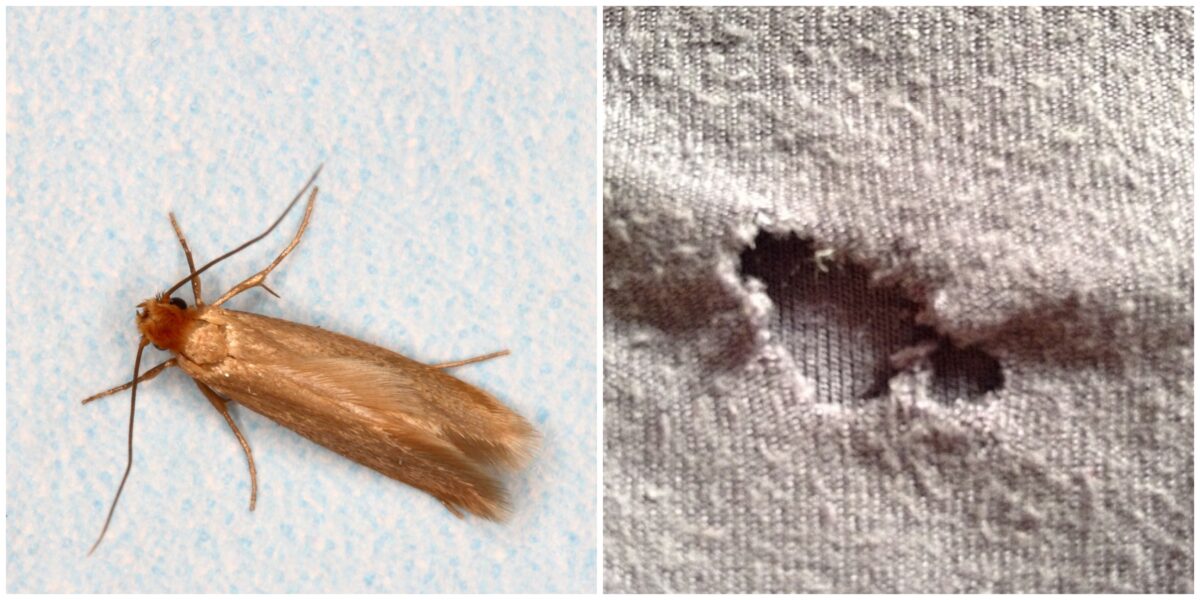
If you have noticed small holes in your clothes, insects could be the culprit. Some insects like moths and silverfish can cause damage to fabrics.
Understanding the types of damage caused by these insects can help you prevent further damage to your clothes.
Damage From Moths
Moths are notorious for causing damage to clothes. They lay their eggs on natural fibres like wool, silk, and cotton. When the eggs hatch, the larvae feed on the fabric, creating holes.
The damage caused by moth larvae may not be noticeable at first, but over time, it can become extensive.
To prevent damage from moths, you can take a few precautions. Store your clothes in airtight containers or bags. Use mothballs or cedar blocks to repel moths.
Regularly clean your clothes and vacuum your closet to remove any eggs or larvae.
Damage From Silverfish
Silverfish are another type of insect that can cause damage to clothes.
They are attracted to natural fibres like cotton and silk. They feed on the fabric, creating holes and leaving behind yellow stains.
To prevent damage from silverfish, you can take a few precautions. Store your clothes in airtight containers or bags. Keep your closet clean and dry.
Use dehumidifiers to reduce the humidity in your home. These measures can help prevent silverfish from infesting your clothes.
Preventing Clothes Damage From Washing Machine
If you’ve ever experienced holes in your clothes after washing them, you know how frustrating it can be. Fortunately, there are a few things you can do to prevent this from happening.
Using Mesh Laundry Bags
One of the easiest ways to prevent damage to your clothes is to use mesh laundry bags. These bags are designed to protect your clothes from getting tangled up with other items in the wash.
They’re especially useful for delicate items like bras, lace, and silky fabrics that can snag on zippers or other embellishments.
Simply place your delicate items in the bag before washing, and you’ll reduce the risk of damage.
Reading Care Labels
Another important step in preventing clothes damage is to read care labels. Care labels provide information on how to wash and dry your clothes properly.
For example, some items may need to be washed on a delicate cycle, while others may need to be air-dried instead of put in the dryer.
By following the care instructions on your clothes, you’ll reduce the risk of damage and prolong the life of your garments.
Proper Loading Of Washing Machine
Properly loading your washing machine can also help prevent damage to your clothes. Be sure to sort your clothes by colour and fabric type before washing.
Heavy items like towels and denim should be washed separately from delicate items like silk and lace.
Additionally, be sure not to overload your washing machine as this can cause clothes to get tangled up and damaged.
Addressing Washing Machine Drum Damage
If your washing machine is putting holes in your clothes, it could be due to drum damage. Identifying and repairing drum damage can help prevent further damage to your clothes.
Identifying Drum Damage
Front-loading washing machines are more prone to drum damage compared to top-loading washing machines. It is important to check the drum of your washing machine for any scratches, dents, or holes.
These can be caused by sharp objects left in pockets, zippers, or buttons on clothes, or even by the washing machine itself.
If you notice any damage to the drum, it is important to address it before it causes further damage to your clothes.
Clothes can get stuck in the holes or snagged on the scratched surface of the drum, causing holes or tears.
Repairing Drum Holes
If you have identified drum holes, repairing them can help prevent further damage to your clothes. There are a few ways to repair drum holes, depending on the severity of the damage.
For small scratches or holes, you can use a drum repair kit. These kits usually come with a filler and paint that can be used to repair small holes or scratches on the drum’s surface.
For larger holes or dents, it may be necessary to replace the drum. It is important to contact a professional to help with drum replacement, as it can be a complex and time-consuming process.

Founder of homeappliancegeek.com, avid cook, and lover of Asian food.
Signature dishes include Thai Red Curry, Chicken Saag, Bibimbap and Sushi.
Massive clean freak; a habit baked-in after spending 9 years in the catering industry.
The one appliance he couldn’t live without? Easily the dishwasher (total relationship saver!).