Can you extend a washing machine drain hose?
Extending the drain hose can be a useful solution when your current hose isn’t long enough to reach the designated drain or if you need extra leeway when moving your washing machine.
In many cases, you can indeed lengthen the drain hose of your machine by using the right materials and tools.
Understanding the various aspects of washing machine drain hose extensions is crucial. Factors such as compatibility, types of extensions, tools, and materials required should be taken into account.
Additionally, you should follow the step-by-step process to ensure a successful extension while keeping safety considerations in mind.
Bear in mind that, if you face any difficulties during the process, it’s always advisable to consult a professional to avoid any damage to your washing machine or improper installation.
Key Takeaways
- Extending your washing machine drain hose is possible using the right tools and materials
- Consider compatibility and types of extensions while undertaking the process
- Consult a professional if you face any difficulties during the extension process
Understanding Washing Machine Drain Hose Extensions
When you need to extend the drain hose of your washing machine, it’s essential to understand the correct way to do it.
This ensures that your machine will function properly, and prevents any potential issues that could arise from improper installation.
Firstly, measure the distance between your washing machine and the desired location for the drain hose to ensure you purchase the correct length of extension hose.
Turn off the water supply to the machine before starting any work, to avoid water damage or accidents.
To extend the drain hose, connect the extension hose to the existing pipe, making sure they are securely attached.
Take care not to kink or twist the hoses during this process, as this could lead to blockages or restricted water flow.
It’s a good idea to install a curved hose form at the point where the two hoses meet, as this prevents kinks and helps maintain water flow.
Once you have connected the extension hose, test your washing machine by running an empty wash cycle.
Keep an eye on the connection during this time, checking for any water leaks or issues with the drain hose extension.
Here are some key points to keep in mind when extending your washing machine drain hose:
- Measure the required distance before purchasing the extension hose
- Disconnect the water supply before making changes to the hoses
- Securely attach the extension hose to the existing pipe
- Install a curved hose form to prevent kinks and maintain water flow
- Test the washing machine after connecting the extension hose to ensure proper operation
Following these steps will ensure that your washing machine drain hose extension is installed correctly and functions effectively.
If you encounter any issues during the installation process, it’s advised to consult a professional plumber for assistance.
Compatibility And Types Of Drain Hose Extensions
When considering extending your washing machine’s drain hose, it’s essential to verify compatibility and choose the right type of extension.
There are multiple options available to extend the drain hose, with various lengths and materials to suit your particular needs.
To find a compatible extension for your washing machine, you should first inspect your appliance’s specifications and recommended maximum hose length.
Some manufacturers recommend not extending beyond 2.5 metres, while others may allow for longer extensions depending on the model.
Keeping within these recommendations ensures optimal performance and reduces the risk of complications.
Universal drain hose extension kits are available, designed for compatibility with a broad range of washing machine models.
These kits typically include extension hoses, clamps, and instructions for easy installation. Choosing a high-quality universal kit can simplify the process considerably, helping to ensure a secure and reliable connection.
Corrugated plastic hoses are a popular choice for extensions, primarily due to their flexible nature and resistance to kinking.
Compared to rubber hoses, they offer increased durability and a larger inside diameter to reduce the likelihood of blockages.
When selecting an extension, it’s crucial to opt for a diameter large enough to accommodate your existing hose and allow for proper drainage.
In some cases, you may need to connect the extension to a sink, tub, or drain hole. There are specific kits available for these applications, featuring additional components such as sink connectors or adapters.
By selecting the correct kit for your requirements, you can be confident in achieving a successful and secure connection.
Tools And Materials Required For Washing Machine Drain Hose
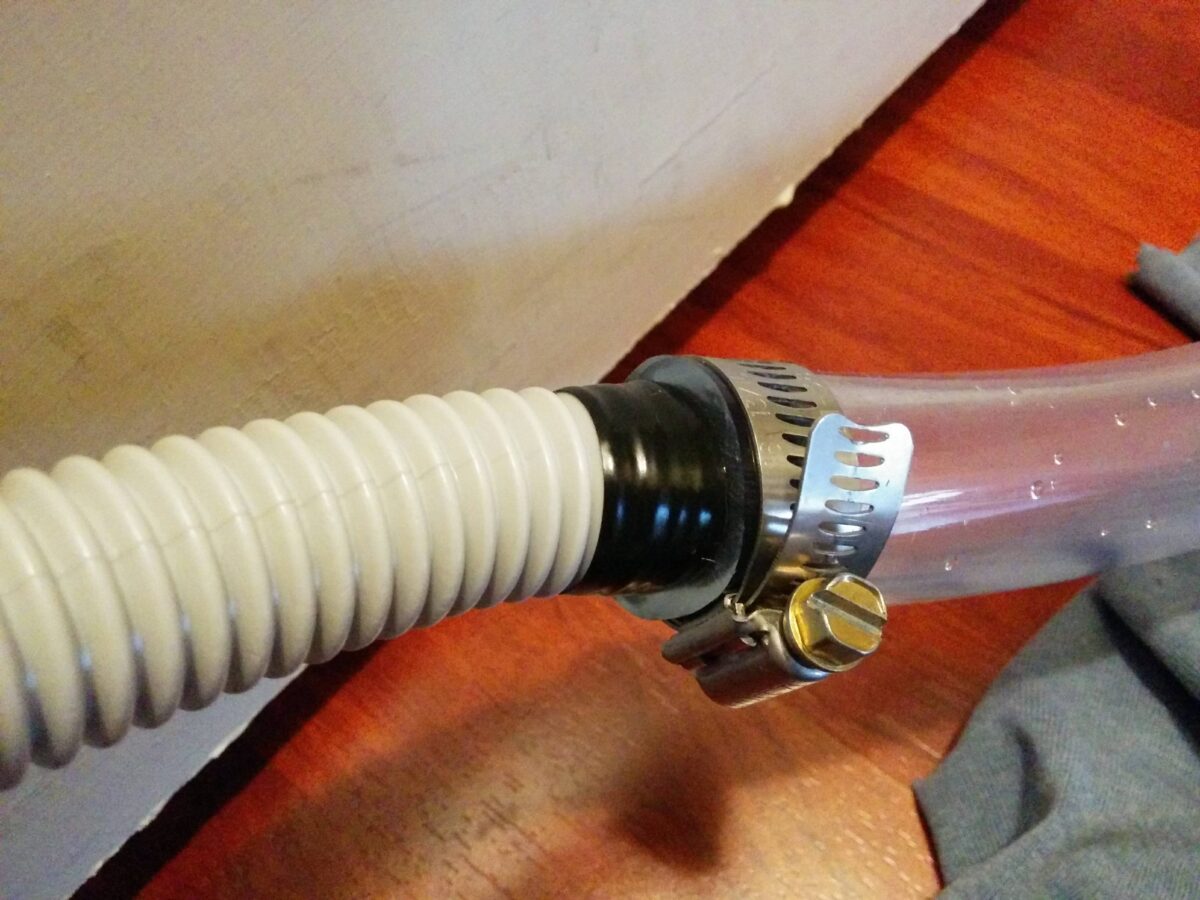
Before extending your washing machine drain hose, gather the necessary tools and materials for the task. This section covers the essential items you will need.
Measuring Tape
A measuring tape will help you to accurately determine the length of extension required.
Measure the distance between your washing machine and the standpipe to know how much additional length you will need for the new drain pipe.
Hose Coupler
A hose coupler is a small plastic or rubber connector that allows you to securely join the original drain hose and the extension hose.
When purchasing a coupler, make sure that it fits snugly into both hose ends and holds them together tightly.
Hose Clamps
In order to keep the connection between the original drain hose and the extension hose secure, you will need hose clamps.
These clamps are adjustable and can be easily wrapped around the hose connections, ensuring they stay together and do not leak.
Pipe Cutter
Although not always required, a pipe cutter might come in handy should you need to trim the extension hose to the desired length.
This tool provides a clean and precise cut, ensuring a perfect fit when connecting the new hose to the existing one.
Teflon Tape
Teflon tape, also known as plumber’s tape, is an essential material for preventing leaks at the connection points.
By wrapping the tape around the threaded ends of both hoses, you create a watertight seal that reduces the risk of water escaping during use.
Once you have all the necessary tools and materials in place, you can proceed with extending your washing machine drain hose.
Remember to keep safety in mind, and if you encounter any difficulties, do not hesitate to consult a professional plumber.
Step By Step Extension Process Of Drain Hose
Measure The Distance
First, determine how far you need to extend your washing machine’s drain hose. Measure the distance from the current end of the hose to the desired endpoint.
Ensure you provide a little bit of slack in your measurement, as this will help prevent the hose from becoming too strained.
Select The Appropriate Hose
Choose an extension hose that is compatible with your washing machine and designed for drain hose extension. Ensure the extension hose has the same diameter as your original hose.
You can usually find these parts at your local hardware store or online retailers.
Cut The Original Hose
If necessary, you can cut the original hose to an appropriate length using a sharp utility knife. Be sure to make a clean, straight cut because this will ensure a better fit when attaching the coupler.
Attach The Coupler
To connect the extension hose to the original hose, you will need a coupler. Slide the coupler onto the end of the original hose until it fits snugly.
Next, slide the extension hose onto the other end of the coupler, ensuring a secure fit.
Secure With Hose Clamps
To prevent leaks, use hose clamps to tighten the connection between the original hose, the coupler, and the extension hose.
Position hose clamps around the coupler and hose connection points, and then tighten them using a flathead screwdriver or a similarly appropriate tool.
Leak-Proof The Connection
After installing the extension and securing with hose clamps, check for any potential leaks. Fill the washing machine with water and run a brief cycle to ensure the connection is watertight.
If you notice any leaks, try adjusting the hose clamps or adding more clamps to ensure a secure fit and prevent water damage.
Safety Considerations
Avoid Excess Length
When extending your washing machine drain hose, it’s essential to avoid excess length.
Ideally, the drain hose should be no more than 9 feet (2.7 metres) from the washing machine since most washing machines come with standard 1.5-metre (4.9 feet) hoses.
Safely extend your hose with a pipe up to 1.2 metres (4 feet) long, remembering that overly long drain hoses may result in drainage issues and possible damage to your appliance.
Properly Secure Extended Hose
To ensure the safety and functionality of your extended washing machine drain hose, you must properly secure it.
When connecting your extended drain hose to the standpipe or drainage point, ensure it is tightly and securely fastened.
The standpipe should be at least 30 inches (76 cm) from the floor, with some washing machines requiring a minimum height of 39 inches (99 cm) for optimal performance.
Properly securing the hose will prevent it from dislodging and minimise the risk of water overflow and fumes from the sewer.
Check For Leaks Periodically
Regularly checking for leaks is crucial in maintaining the safety and efficiency of your extended washing machine drain hose.
Leaks can occur at the connection points or along the hose itself. Inspect the hose and connections for any signs of wear, tears, or damage that could lead to potential leaks.
If you find any issues, replace the damaged parts as soon as possible to avoid further damage to your washing machine and home.
Regular inspections will help ensure a long-lasting, safe operation for your appliance while protecting your home from water damage and unwanted sewer fumes.

Professional Assistance
When considering extending your washing machine drain hose, it’s essential to seek professional assistance.
Expert advice can help you ensure that the extension process is done correctly, avoiding potential problems such as leaks or improper drainage.
A professional technician can recommend the appropriate length for your drain hose based on the distance between the washing machine and the drain.
While a standard drain hose length is around 70 inches, professionals may advise you on the best size for your specific situation.
They will also consider factors like the drainage height, which should be at least 30 inches from the floor.
Another advantage of getting professional help is that technicians can guide you through purchasing the right extension hose.
They can direct you to nearby service centres or shops where you can buy the appropriate drain hoses and hose extensions compatible with your washing machine model.
This ensures that the extension you purchase is of the correct material, size and fit.
Using a professional to connect the extension hose will also minimise the risk of leaks.
They will make sure the joint between the existing drain hose and the extension is secure by using the appropriate sealing method, such as tape wrapping.
Ensuring the joint is leak-free is crucial to prevent water damage or malfunctions in your washing machine.
Remember, a specialist’s knowledge will help you avoid common issues associated with extending a washing machine drain hose.
By seeking their assistance, you can be confident that your extended hose will function correctly and maintain the efficiency of your washing machine.

Founder of homeappliancegeek.com, avid cook, and lover of Asian food.
Signature dishes include Thai Red Curry, Chicken Saag, Bibimbap and Sushi.
Massive clean freak; a habit baked-in after spending 9 years in the catering industry.
The one appliance he couldn’t live without? Easily the dishwasher (total relationship saver!).