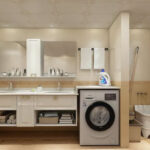
Can you put a washing machine in a garage?
This is a common question among homeowners who want to optimize their living space.
Installing a washing machine in the garage can be convenient, especially if you have limited space inside your house. However, there are several factors to consider before you can decide if it is feasible or not.
Understanding the environmental factors is crucial when it comes to placing a washing machine in a garage.
Extreme temperatures, both hot and cold, can damage the machine or affect the quality of the clothes being washed.
Poor ventilation can also cause condensation and moisture build up, which can lead to mold growth and bad odours.
Plumbing considerations are also important, as you need to ensure that the garage has proper drainage and electricity to operate the machine.
Key Takeaways
- Placing a washing machine in a garage can be convenient if you have limited space inside your house, but it is important to consider the environmental factors before making a decision.
- Extreme temperatures, poor ventilation, and plumbing considerations are some of the factors that you need to take into account when installing a washing machine in a garage.
- Protecting your washing machine, cost implications, safety concerns, and alternatives to garage installation are other factors that you need to consider before making a final decision.
Feasibility Of Placing A Washing Machine In A Garage
If you are considering placing a washing machine in your garage, there are several factors to consider to determine if it is feasible.
In this section, we will explore the advantages and disadvantages of placing a washing machine in a garage.
Advantages
- Free up space: One of the primary advantages of placing a washing machine in a garage is that it frees up space in your home. If you have limited space in your home, moving your washing machine to the garage can be a great way to create more room.
- Easy access: Placing your washing machine in the garage can make it easier to access and use. You can quickly load and unload laundry from your car without having to carry it through your home.
- Reduced noise: If your washing machine is loud, placing it in the garage can help reduce noise levels in your home.
Disadvantages
- Unheated garage: If your garage is unheated, placing a washing machine in it can be problematic. The cold temperatures can cause condensation, which can harm your washing machine over time. You will need to take steps to protect your washing machine from the cold, such as insulating the garage or using a space heater.
- Plumbing: Placing a washing machine in a garage requires access to hot and cold water, as well as a dedicated drain and a connection to the local plumbing system. If your garage does not have these connections, you will need to install them, which can be costly.
- Limited space: While placing a washing machine in a garage can free up space in your home, it can also limit the amount of space you have in your garage. If you use your garage for storage or parking your car, you may need to make adjustments to accommodate your washing machine.
Understanding The Environmental Factors
If you are planning to install a washing machine in your garage, it is important to understand the environmental factors that can affect its performance and longevity.
Insulating The Garage
One of the first things to consider is insulation. Garages are typically not insulated, which can lead to temperature fluctuations that can damage your washing machine.
Freezing temperatures can cause the water in the hoses to freeze and expand, which can crack the hoses or damage the machine.
On the other hand, extreme heat can cause the machine to overheat and malfunction.
To prevent these issues, you should consider insulating your garage. This can be done by adding insulated walls, foam insulation, or weather stripping around windows and doors.
Insulating your garage will help to regulate the temperature and protect your washing machine from extreme weather conditions.
Ventilation And Moisture Control
Another important factor to consider is ventilation and moisture control.
Garages can be damp and humid, which can lead to mould and mildew growth. Moist air and steam from your washing machine can exacerbate this problem.
To prevent moisture build up, you should ensure that your garage is properly ventilated.
This can be done by installing a vent fan or opening windows and doors. You can also use a dehumidifier to remove excess moisture from the air.
Temperature Control
Temperature control is also important when setting up a laundry area in your garage. You should aim to keep the temperature above freezing in the winter and below 90°F in the summer.
A thermostat can help you regulate the temperature and prevent extreme fluctuations.
If you live in an area with particularly cold winter temperatures, you may want to consider using an oil-filled radiator heater to keep the garage warm.
This will help to prevent freezing and ensure that your washing machine operates properly.
By considering these environmental factors and taking steps to regulate the temperature, moisture, and ventilation in your garage, you can ensure that your washing machine operates effectively and lasts for years to come.

Plumbing Considerations For Washing Machine In Garage
When it comes to installing a washing machine in your garage, plumbing considerations are an essential aspect that you need to keep in mind.
Firstly, you need to ensure that the drain line is properly installed. The drain line should be installed at a slope of ¼ inch per foot, and it should be at least 2 inches in diameter.
This will ensure that the water flows smoothly from the washing machine to the drain without any blockages.
Secondly, you need to consider the water supply. You need to ensure that the plumbing line is properly installed to supply water to the washing machine.
The inlet pipes should be at least ¾ inch in diameter, and they should be properly insulated to prevent the water lines from freezing during winter.
Thirdly, you need to ensure that the valves are properly installed. The valves should be installed near the washing machine to control the flow of water.
You should also install a shut-off valve to turn off the water supply to the washing machine in case of an emergency.
Fourthly, you need to consider the fill hose. The fill hose should be properly installed to supply water to the washing machine.
You should ensure that the fill hose is properly connected to the water supply and the washing machine.
Finally, you should consider hiring a plumber to install the plumbing system.
A plumber will ensure that the plumbing system is properly installed, and they will also ensure that the system meets the required safety standards.
Protecting Your Washing Machine In The garage
If you’re planning to put your washing machine in the garage, it’s important to take steps to protect it from damage. Here are some tips to help keep your washing machine in good condition:
Keep It Dry
Garages can be damp and prone to condensation, which can cause rust and other damage to your washing machine.
To prevent this, make sure your garage is well-ventilated and dry. You can also use a dehumidifier to remove excess moisture from the air.
Insulate Your Pipes
If your washing machine is in an unheated garage, the pipes that supply it with water can freeze and burst in cold weather.
To prevent this, insulate the pipes with snap-on foam insulation. This will help keep the water flowing and prevent damage to your machine.
Protect The Hoses
The hoses that connect your washing machine to the water supply can also be damaged in cold weather.
To prevent this, wrap them in bubble wrap or another insulating material. This will help keep them warm and prevent them from cracking or bursting.
Consider A Washer And Dryer Combo
If you’re concerned about protecting your washing machine in the garage, you might want to consider a washer and dryer combo unit.
These units are designed to be more compact and can be easier to protect from damage in a garage.
By taking these steps, you can help protect your washing machine and keep it in good condition, even when it’s in the garage.
Cost Implications
When considering moving your washing machine to the garage, it’s essential to factor in the cost implications.
The cost of relocating washer and dryer hook ups can range from £50 to £175 per unit for the simplest, most straightforward projects.
However, the cost can rise significantly if you need to make structural changes to accommodate the laundry space.
On average, the cost to move your washer and dryer into the garage will be between £1,060 and £4,475. This cost will cover the installation of washer and dryer hook ups, drain line, dryer vent installation, and installing an outlet.
You may also find that adding a fully-finished space for a laundry room can cost as much as £15,000.
It’s important to note that the cost of relocating your washer and dryer to the garage may not be the only cost you incur.
You will also need to consider the cost of running the appliances in the garage. If your garage is not heated, you may need to run the appliances for longer periods, increasing your energy bills.
Another cost implication to consider is the potential damage to your washing machine caused by extreme temperatures.
While it is possible to put a washing machine in an unheated garage, it is not usually recommended. Extreme temperatures, both hot and cold, can cause damage to the machine or the items being washed.
Safety Concerns Of Washing Machine In The Garage

When it comes to installing a washing machine in your garage, there are a few safety concerns that you need to keep in mind.
Here are some things to consider:
Appliances
First and foremost, you need to make sure that your washing machine is installed correctly. If it is not installed properly, it can pose a risk of electrical shock or fire.
Make sure that you follow the manufacturer’s instructions carefully and hire a professional if you are unsure.
Fire
Garages can be a fire hazard due to the presence of flammable materials such as gasoline, oil, and paint.
To reduce the risk of fire, make sure that these materials are stored in a safe location away from your washing machine.
Additionally, be sure to clean out the lint trap in your dryer regularly to prevent the build up of lint, which can also be a fire hazard.
Garage Doors
Another safety concern to keep in mind is your garage door. If your garage door is not functioning properly, it can pose a risk of injury or even death.
Make sure that your garage door is in good working order and that it is equipped with safety features such as photoelectric sensors and an automatic reverse function.
By keeping these safety concerns in mind, you can ensure that your washing machine is installed safely and that your garage remains a safe place for you and your family.
Alternatives To Garage Installation
If you don’t have enough space in your home to create a laundry room, or if you don’t want to install your washing machine in the garage, there are other alternatives you can consider.
One option is to install your washing machine in a standalone dressing room.
This way, you can keep your laundry separate from the rest of your living space and avoid cluttering up other areas of your home.
Additionally, having your washing machine in a dressing room can make it easier to remove and sort your clothes before washing them.
Another option is to place your washing machine in a kitchen cabinet. This can be a great solution if you have limited space in your home and want to keep your laundry area hidden away.
You can install your washing machine and dryer in a cabinet under your kitchen counter, or you can create a separate laundry area in a pantry or closet.
If you don’t have space in your home for a laundry room or cabinet, you can also consider using a laundry service.
Many dry cleaners and laundromats offer laundry services for a fee, which can be a convenient option if you don’t have time to do your own laundry or if you have a large family and need to wash a lot of clothes.
Ultimately, the best option for you will depend on your individual needs and preferences.
Consider your available space, budget, and lifestyle when deciding where to install your washing machine or whether to use a laundry service.

Founder of homeappliancegeek.com, avid cook, and lover of Asian food.
Signature dishes include Thai Red Curry, Chicken Saag, Bibimbap and Sushi.
Massive clean freak; a habit baked-in after spending 9 years in the catering industry.
The one appliance he couldn’t live without? Easily the dishwasher (total relationship saver!).